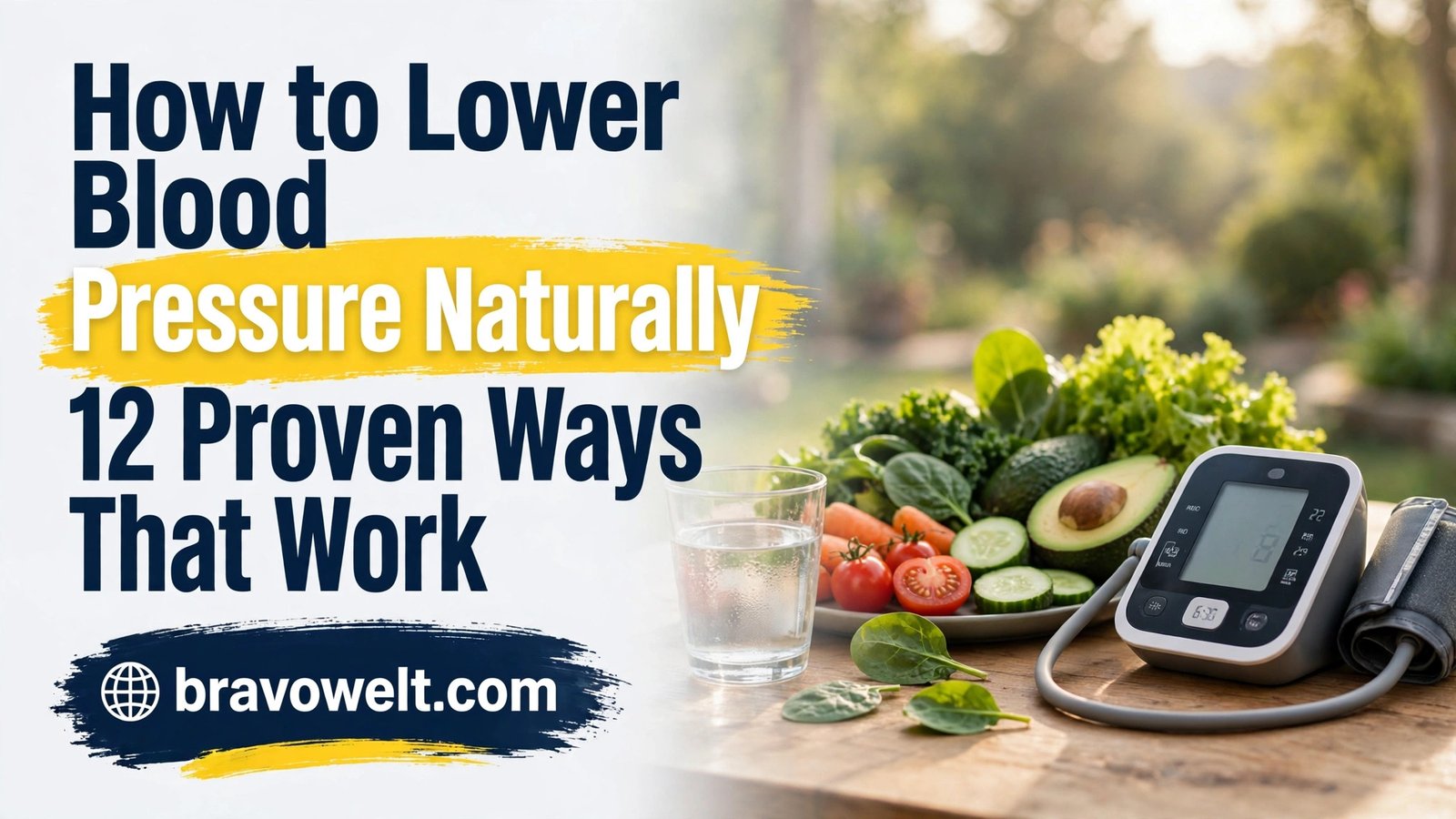
High blood pressure, also called hypertension, affects nearly half of all adults, and many people do not even know they have it. It rarely causes symptoms, yet over time it quietly damages your arteries, heart, kidneys, and brain.
The good news is that you can often bring your numbers down without medication, or with a lower dose, by changing a few daily habits. If you want to know how to lower blood pressure naturally, the steps below are a practical place to start. They are backed by research, they cost little or nothing, and most people notice a difference within a few weeks.
Table of Contents
Eat More Potassium-Rich Foods
Potassium helps your body get rid of extra sodium and relaxes the walls of your blood vessels, which lowers pressure. Most adults need around 3,500 to 4,700 milligrams a day, but the average diet falls far short.
Bananas get all the attention, yet potatoes, sweet potatoes, beans, lentils, spinach, tomatoes, yogurt, and oranges are even richer sources. Aim to fill half your plate with vegetables and fruit at lunch and dinner, and add a potassium-rich food to breakfast, such as a banana with oatmeal or spinach in an omelet. If you have kidney problems, talk to your doctor first, because too much potassium can be harmful in that case. For most healthy people, food is the safest way to raise potassium, and supplements are rarely needed.
Cut Back on Sodium the Smart Way
Sodium is one of the biggest drivers of high blood pressure. Most of the salt you eat does not come from your salt shaker. It hides in bread, cheese, sauces, processed meats, canned soups, and restaurant meals.
Health experts suggest keeping sodium under 2,300 milligrams a day, and ideally closer to 1,500 milligrams if your blood pressure is high. That sounds strict, but small swaps add up fast. Cook with herbs, garlic, lemon, and spices instead of salt. Compare labels and pick the lower-sodium version of bread, canned beans, and tomato sauce. Rinse canned beans and vegetables before eating them. Eat out less often, and when you do, ask for sauces and dressings on the side. Your taste buds adjust within two or three weeks, and food starts to taste normal again.
How to Lower Blood Pressure Naturally with Daily Movement
Regular movement is one of the most powerful natural tools for lowering blood pressure. Aerobic exercise such as brisk walking, cycling, swimming, or dancing can lower systolic pressure by 5 to 8 points, and the effect starts after just a few sessions.
Aim for at least 150 minutes of moderate activity a week, which breaks down to 30 minutes on five days. You do not need a gym. A brisk walk after lunch, taking the stairs, and gardening all count. Strength training twice a week adds extra benefit by improving blood vessel function and helping with weight control. Start slowly if you have been inactive, and build up by five minutes a week. Check your blood pressure before and after a month of regular movement, and you will likely see the numbers move in the right direction.
Lose Extra Weight Gradually
Carrying extra weight forces your heart to work harder and raises your blood pressure. The good news is that you do not need to lose a dramatic amount to see results. Losing just 5 to 10 percent of your body weight can lower blood pressure by several points.
Focus on steady habits rather than crash diets. Eat smaller portions, cut back on sugary drinks, and fill half your plate with vegetables. Track your food for a week to spot hidden calories, such as sauces, snacks, and sweetened coffee drinks. If you have a lot of weight to lose, ask your doctor or a dietitian for a plan that fits your health and lifestyle.
Limit Alcohol and Quit Smoking
Alcohol raises blood pressure, and the effect grows with the amount you drink. If you drink, keep it moderate: up to one drink a day for women and up to two for men. Even better, take several alcohol-free days each week and notice how you sleep and feel.
Smoking is a separate problem. Each cigarette causes a sharp, temporary spike in blood pressure, and over time smoking damages artery walls and makes hypertension worse. Quitting is one of the best things you can do for your heart, and blood pressure often improves within weeks of stopping. If quitting feels hard, ask your doctor about nicotine replacement, prescription options, or support programs. Many people need more than one attempt, and that is normal.
Manage Stress Every Day
Stress does not cause long-term hypertension by itself, but frequent stress spikes raise your pressure and often lead to unhealthy habits such as overeating, drinking, or skipping exercise. Learning to manage stress is therefore a real part of blood pressure control.
Try deep breathing for five minutes a day: breathe in slowly for four counts, hold for four, and breathe out for six. Regular practices such as meditation, yoga, stretching, or a quiet walk in nature can lower stress hormones. Protect your time by saying no to extra commitments when you are overloaded, and keep in touch with friends and family. If stress feels constant or overwhelming, talking to a counselor can help more than you might expect.
Get Enough Quality Sleep
Poor sleep and high blood pressure go hand in hand. Adults who regularly sleep less than seven hours have a higher risk of hypertension, and conditions such as sleep apnea can raise pressure sharply at night.
Aim for seven to nine hours of sleep and keep a regular bedtime and wake time, even on weekends. Make your bedroom dark, quiet, and cool, and avoid screens for at least 30 minutes before bed. Cut back on caffeine after midday, and avoid heavy meals and alcohol late in the evening. If you snore loudly, wake up gasping, or feel tired despite a full night in bed, ask your doctor about a sleep study. Treating sleep apnea often brings blood pressure down noticeably.
When to See a Doctor
Natural methods work well for many people, but they are not a replacement for medical care. See your doctor if your readings are often above 140/90, if you have symptoms such as severe headaches, chest pain, or vision changes, or if home changes have not helped after two or three months.
Your doctor may check for other causes, such as kidney problems or thyroid issues, and may prescribe medicine if needed. Taking medication does not mean you failed. Many people use medicine alongside lifestyle changes, and some can reduce their dose over time as their numbers improve. Keep a simple log of your home readings and bring it to your appointments, so your doctor can see the full picture.
Lowering your blood pressure naturally comes down to a handful of habits done consistently: eat more whole foods, move every day, sleep well, manage stress, and keep alcohol and salt in check. Pick one or two changes to start with this week. Small steps, repeated daily, add up to real change in your numbers and your long-term health.
Learning how to lower blood pressure naturally takes patience, but the results are worth it. If you are wondering how to lower blood pressure naturally without medication, start with the habits above and track your readings. Many people find that learning how to lower blood pressure naturally becomes easier once the first habit sticks. Start learning how to lower blood pressure naturally today, one habit at a time.
How to lower blood pressure naturally is a question many people ask, and the answer starts with one small change today.
Related guides: CDC: Preventing High Blood Pressure · American Heart Association: How Can I Reduce High Blood Pressure? · How to Remove Coffee Stains from Clothes · How to Clean a Microwave