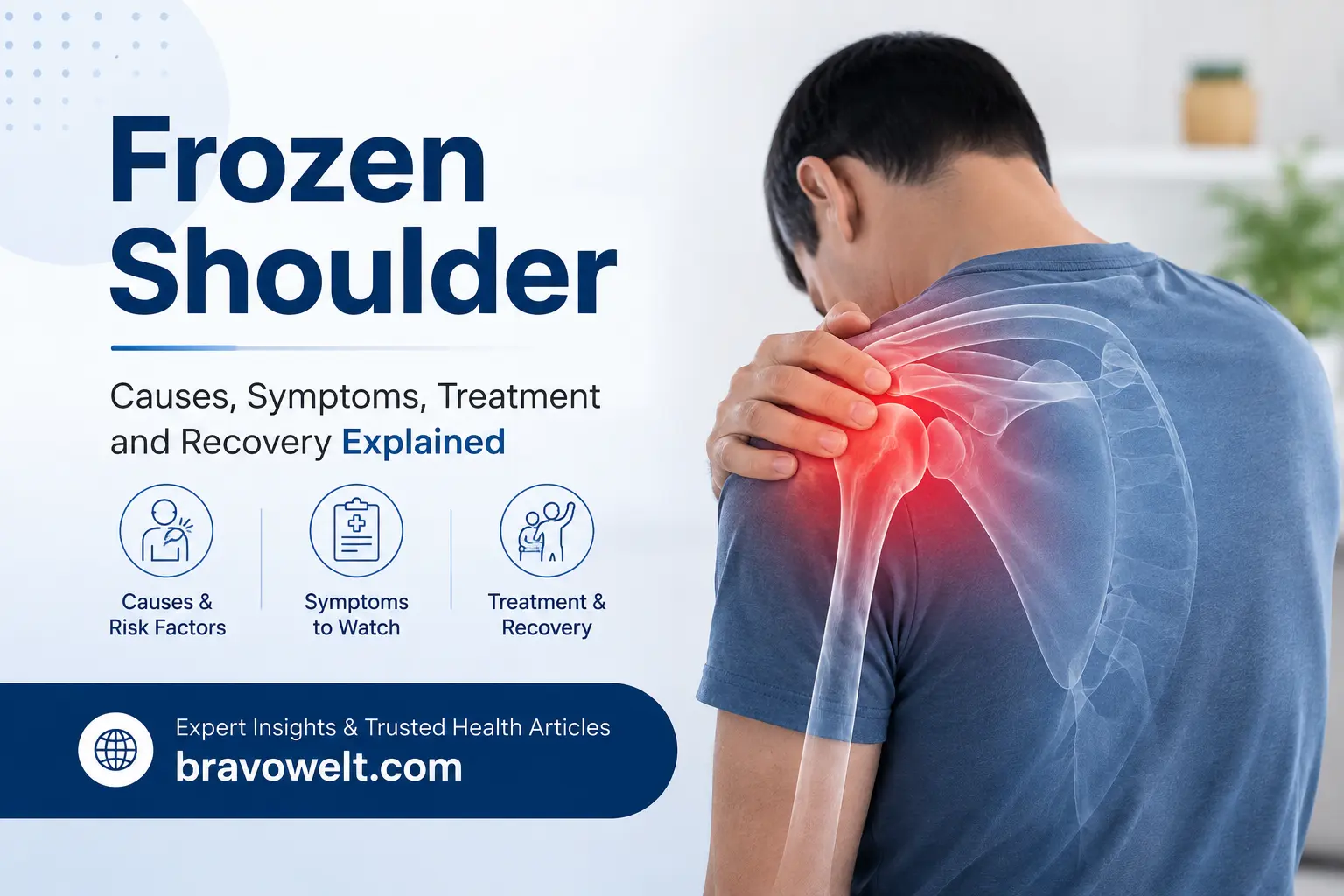
Frozen shoulder is a painful condition in which the shoulder gradually becomes stiff and difficult to move. Doctors also call it adhesive capsulitis because the joint capsule surrounding the shoulder becomes thick, tight, and less flexible. A person may first notice pain while reaching overhead, putting on clothes, fastening a seat belt, or sleeping on the affected side. As the condition progresses, even simple movements can become difficult.
Frozen shoulder does not usually develop overnight. Symptoms often build slowly and may continue for months. Pain can be especially troublesome at night, while stiffness may eventually become the main problem. Although recovery can be slow, most people improve over time, particularly when pain is controlled and safe shoulder movement is maintained.
One reason this condition can be confusing is that several other problems cause similar symptoms. Rotator cuff disease, shoulder arthritis, bursitis, tendon problems, and previous injuries may all cause shoulder pain. The pattern of movement loss, medical history, physical examination, and sometimes imaging help a healthcare professional determine the cause.
This guide covers the condition from beginning to end, including symptoms, stages, causes, risk factors, diagnosis, treatment options, rehabilitation, sleep problems, recovery, recurrence, and warning signs that need medical attention.
What Is Frozen Shoulder?
Frozen shoulder is medically known as adhesive capsulitis. It affects the glenohumeral joint, which is the main ball-and-socket joint of the shoulder. This joint is surrounded by flexible connective tissue called the shoulder capsule. In adhesive capsulitis, this capsule becomes inflamed, thickened, and contracted, making normal movement increasingly difficult.
The shoulder normally allows a very large range of motion. You can lift the arm overhead, rotate it outward, reach behind the back, and move it across the body. When the capsule becomes tight, these movements become restricted. External rotation, such as turning the forearm outward while keeping the elbow close to the body, is often particularly limited.
An important feature is that movement is restricted both when the person tries to move the arm independently and when a clinician tries to move the relaxed arm. This characteristic helps distinguish adhesive capsulitis from several muscle and tendon conditions.
The disorder is generally described as primary when no clear trigger is identified. It may be considered secondary when it appears after surgery, trauma, prolonged immobilization, or another medical problem.
Can the condition develop even if the shoulder was never injured? Yes. Many people cannot identify a specific injury or event before their symptoms begin.
Symptoms of Frozen Shoulder
The two main symptoms are shoulder pain and progressive stiffness. Symptoms usually develop gradually rather than following one sudden movement. Early in the condition, pain may be more noticeable than stiffness. Later, pain may decrease while restricted movement becomes the biggest problem.
Common symptoms can include:
- Deep or aching pain around the shoulder
- Pain that becomes worse at night
- Difficulty sleeping on the affected side
- Reduced ability to lift the arm overhead
- Difficulty reaching behind the back
- Trouble putting on a jacket, shirt, bra, or coat
- Difficulty washing or combing hair
- Trouble reaching a high cupboard
- Restricted outward rotation of the arm
- Increasing shoulder stiffness
- Difficulty performing work, exercise, or household tasks
The pain may sometimes travel into the upper arm, but symptoms usually remain centered around the shoulder region. The amount of pain varies considerably. Some people experience severe pain during the early phase, while others mainly notice loss of movement.
Does stiffness appear suddenly? In most cases, no. Mobility gradually decreases over weeks or months.
A healthcare assessment is useful when pain and stiffness continue rather than improving, especially when movement becomes noticeably restricted.
What Does Frozen Shoulder Pain Feel Like?
Pain from adhesive capsulitis is commonly described as a deep, dull, aching pain around the outer or front part of the shoulder. During the more painful phase, sudden movements may cause sharper discomfort. Reaching quickly for an object, moving the arm unexpectedly, or rolling onto the painful shoulder in bed may trigger a stronger pain response.
Night pain is particularly common. Some people wake repeatedly because they cannot find a comfortable sleeping position. Pressure on the affected side may increase discomfort, and turning in bed can create sudden pain when the arm moves unexpectedly.
Pain may also appear near the upper arm, which can make people think that the problem is located in the arm rather than the shoulder joint itself. However, pain patterns vary, so location alone cannot confirm the diagnosis.
Another important clue is the combination of pain and stiffness. With some shoulder injuries, movement is painful but the joint can still be moved through a relatively normal passive range. Adhesive capsulitis usually produces genuine restriction.
Is severe pain always present? No. Pain intensity often changes as the condition moves through its different stages. The shoulder may eventually become less painful but remain very stiff.
Stages of Frozen Shoulder
Adhesive capsulitis is commonly described in three stages: freezing, frozen, and thawing. These stages help explain why symptoms may change over time. They are useful for understanding the usual pattern, but every person does not follow exactly the same timeline.
During the freezing phase, pain increases and mobility gradually decreases. In the frozen phase, pain may settle somewhat, but stiffness can remain significant. During thawing, movement gradually returns.
The complete course can take many months and sometimes several years. Recovery speed depends on factors such as symptom severity, general health, diabetes, previous surgery or injury, response to treatment, and how much mobility has been lost.
The stages can overlap. There is not always a clear day when one stage ends and another begins.
Why do the stages matter? Because treatment priorities may change. Pain control can be particularly important during the painful stage, while carefully restoring mobility becomes increasingly important as pain settles.
Understanding the stage can also set realistic expectations. A slow recovery does not automatically mean treatment has failed.
Freezing Stage of Frozen Shoulder
The freezing stage is usually the first and most painful phase. Shoulder discomfort gradually becomes more frequent, and the range of motion begins to shrink. Activities that were previously easy may start to cause pain, including reaching overhead, reaching behind the body, dressing, or lying on the affected side.
Night pain is often troublesome during this period. Sleep may be interrupted, and sudden arm movements can cause sharp discomfort. Because movement hurts, people may naturally begin protecting the arm and using it less.
However, complete avoidance of movement can contribute to additional stiffness. The goal is generally to maintain safe, comfortable movement rather than forcing the joint aggressively.
During this stage, treatment often focuses on:
- Controlling pain
- Maintaining tolerable joint movement
- Modifying painful activities
- Using appropriate medication when recommended
- Beginning gentle mobility exercises
- Considering an injection when clinically appropriate
Should you force stretching during the painful stage? Aggressive stretching that causes significant pain is generally not the goal. Exercise intensity should match symptoms and professional guidance.
This stage may continue for several months before pain begins to settle.
Frozen Stage of Frozen Shoulder
During the frozen stage, pain may become less intense, but stiffness often remains pronounced. For many people, limited mobility becomes more frustrating than pain.
The shoulder may feel physically blocked when attempting certain movements. Reaching behind the back is commonly difficult. Raising the arm overhead can also be restricted, and rotating the arm outward may remain particularly limited.
Daily tasks may require compensation. A person may lean the body, lift the shoulder blade excessively, or use the unaffected arm to complete activities.
This stage can affect:
- Dressing and undressing
- Hair care
- Bathing
- Driving
- Reaching shelves
- Household work
- Sports
- Manual work
- Sleeping positions
Physical therapy may place greater emphasis on restoring movement as pain becomes more manageable. Stretching and assisted range-of-motion exercises can be adjusted according to tolerance.
Does less pain mean the problem has healed? Not necessarily. Pain often improves before full mobility returns. Significant joint restriction may remain even when the shoulder feels less painful.
Thawing Stage of Frozen Shoulder
The thawing stage is the recovery phase. Movement gradually begins to return, everyday activities become easier, and stiffness slowly decreases.
Improvement is often gradual rather than dramatic. A person may notice that reaching a shelf becomes slightly easier, dressing requires less compensation, or the arm rotates farther than it did several weeks earlier.
Rehabilitation during this phase may include a progression from mobility work toward strengthening and functional activities. The objective is not simply to stretch the shoulder but to restore practical use of the entire upper limb.
Exercises may address:
- Shoulder elevation
- External rotation
- Internal rotation
- Scapular movement
- Posture
- Strength
- Coordination
- Functional reaching
Will movement return all at once? Usually not. Improvement commonly occurs over weeks and months.
Some people recover almost all their previous mobility, while others may retain a small amount of restriction. Persistent limitations should be reviewed if they continue to interfere with work, sleep, exercise, or normal daily activities.
Causes of Frozen Shoulder
The exact cause is not always known. In primary adhesive capsulitis, symptoms develop without an obvious injury or surgery. Researchers know that the shoulder capsule becomes inflamed and later develops thickening, fibrosis, and contracture, but the reason this process begins in certain people is not completely understood.
Secondary cases may appear after situations that reduce normal shoulder movement.
Possible contributing situations include:
- Shoulder injury
- Arm fracture
- Shoulder surgery
- Breast or chest surgery
- Prolonged use of a sling
- Extended immobilization
- Stroke-related weakness
- Other conditions that make normal arm movement difficult
Inflammatory and fibrotic changes gradually reduce the capacity of the capsule to stretch during movement.
Can simply sleeping badly cause adhesive capsulitis? Sleeping position alone is not considered a typical cause. However, pain from an existing shoulder problem may lead to reduced use of the arm, which can contribute to stiffness.
In many cases, there is no single action that a patient could have avoided.
Risk Factors for Frozen Shoulder
Certain people have a higher chance of developing adhesive capsulitis. Age is an important factor, with the condition occurring most often in middle-aged adults. It can occur outside this age range, but it is less typical.
Medical conditions associated with a higher risk include diabetes and thyroid disorders. Other systemic conditions have also been reported in association with shoulder stiffness, although an association does not necessarily mean one condition directly causes the other.
Important risk factors include:
- Age, particularly middle age
- Diabetes mellitus
- Thyroid disease
- Previous shoulder surgery
- Previous shoulder or arm injury
- Prolonged shoulder immobilization
- Limited arm use following illness
- Certain neurologic conditions
- Previous adhesive capsulitis in the opposite shoulder
Does having a risk factor mean the condition will definitely occur? No. Risk factors increase probability but do not guarantee that a person will develop the disorder.
A healthcare professional may ask about these conditions during assessment because they can influence diagnosis, management, and expected recovery.
Frozen Shoulder and Diabetes
The relationship between adhesive capsulitis and diabetes is clinically important. People living with diabetes develop this shoulder condition more frequently than the general population.
The exact biological reason is still being studied. Long-term changes in connective tissue related to glucose metabolism may play a role. Collagen can become less flexible, which may contribute to stiffness and capsular changes.
People with diabetes may also experience a more persistent course in some cases. This does not mean meaningful recovery is impossible, but rehabilitation may require patience and consistent management.
Good overall diabetes management remains important for general health and may support musculoskeletal recovery.
A person with diabetes who develops increasing shoulder stiffness should not simply assume that the symptoms are an unavoidable complication. Other conditions, including rotator cuff disease and arthritis, can still occur and may require different treatment.
Should blood sugar control replace shoulder treatment? No. Diabetes management and shoulder management address different parts of the problem and may need to occur together.
Frozen Shoulder After Injury or Surgery
Shoulder stiffness can develop after an injury or surgical procedure when pain or medical restrictions prevent normal arm movement for an extended period. This is one reason rehabilitation after surgery or injury often includes a carefully planned progression of movement.
The challenge is that movement may need to be restricted temporarily to protect healing tissues. For example, after certain fractures or operations, immediate full movement may be unsafe. The rehabilitation plan therefore balances tissue protection with the risk of excessive stiffness.
Secondary adhesive capsulitis may occur after:
- Shoulder surgery
- Fractures involving the upper arm
- Rotator cuff procedures
- Periods of sling use
- Chest or breast surgery
- Other injuries that reduce normal arm movement
Can early movement always prevent stiffness? No. The appropriate timing depends on the original injury or operation. Patients should never ignore surgical restrictions simply to keep the shoulder mobile.
The safest approach is to follow the rehabilitation plan provided by the surgeon, doctor, or physical therapist.
How Frozen Shoulder Is Diagnosed
Diagnosis is usually based primarily on the medical history and physical examination. A healthcare professional asks when symptoms started, how they developed, which activities are difficult, whether there was an injury or operation, and whether the patient has conditions such as diabetes or thyroid disease.
The physical examination looks at several types of shoulder movement. The clinician may ask the person to lift, rotate, and position the arm independently. The examiner may then move the relaxed arm manually.
Typical findings include restriction in several directions, particularly external rotation.
The examination may also assess:
- Strength
- Tenderness
- Neck movement
- Shoulder blade movement
- Neurologic symptoms
- Pain location
- Functional limitations
Imaging is not always required to confirm adhesive capsulitis. X-rays may be used to exclude significant arthritis or bone abnormalities. Ultrasound or MRI may be considered when another condition, such as a rotator cuff tear, is suspected.
Is there one test that proves the diagnosis? Usually no. The overall symptom pattern and examination are more important than a single test.
Active vs Passive Range of Motion in Frozen Shoulder
Understanding active and passive range of motion makes the diagnosis much easier to understand.
Active range of motion means how far you can move your shoulder using your own muscles. For example, lifting your arm above your head without assistance is an active movement.
Passive range of motion means how far the joint can move when someone else moves your relaxed arm.
With adhesive capsulitis, both are usually restricted. The capsule itself has become tight, so even when the shoulder muscles are relaxed, the joint cannot move normally.
This differs from some rotator cuff problems. A person with a painful or weak tendon may struggle to raise the arm actively, but a clinician may still be able to move the relaxed arm farther.
Clinicians often compare both shoulders and assess different directions.
Important movements include:
- Forward elevation
- Abduction
- External rotation
- Internal rotation
- Reaching behind the back
External rotation restriction is particularly useful during assessment.
What Can Be Mistaken for Frozen Shoulder?
Several shoulder disorders can produce pain, night discomfort, weakness, or restricted movement. Correct diagnosis matters because treatment can differ considerably.
Conditions that may cause similar complaints include:
- Rotator cuff tendinopathy
- Rotator cuff tear
- Shoulder osteoarthritis
- Calcific tendinitis
- Subacromial bursitis
- Shoulder impingement-related pain
- Cervical nerve irritation
- Previous fracture
- Shoulder instability
- Referred pain from the neck
A key difference is the pattern of stiffness. Adhesive capsulitis generally restricts passive as well as active movement.
Neck disorders may produce arm pain, numbness, tingling, or symptoms that change with neck movement. Arthritis may cause stiffness but can also show characteristic joint changes on X-ray.
Can self-testing reliably distinguish these conditions? Not always. Similar symptoms overlap too much for a home test to replace a proper clinical examination.
Persistent shoulder pain combined with substantial movement loss is a good reason to seek professional assessment.
Frozen Shoulder vs Rotator Cuff Tear
A rotator cuff tear affects one or more tendons that help stabilize and move the shoulder. Adhesive capsulitis primarily affects the joint capsule. Both conditions may cause pain at night and difficulty lifting the arm, so they can initially seem similar.
One useful distinction involves passive motion. With capsular restriction, passive movement is significantly limited. In many rotator cuff problems, passive movement can remain relatively preserved even when active movement is painful or weak.
Rotator cuff tears may also produce noticeable weakness, particularly when lifting or rotating the arm. Some tears occur after trauma, while others develop gradually as tendons degenerate over time.
Typical differences include:
- Capsular condition: marked stiffness in multiple directions
- Rotator cuff tear: weakness may be more prominent
- Capsular condition: passive movement is restricted
- Rotator cuff tear: passive movement may remain better than active movement
- Both: night pain can occur
Imaging such as ultrasound or MRI may be helpful if the examination suggests a tendon tear.
For the latest updates and guides, visit our Candlelight Concert.
Frozen Shoulder vs Shoulder Arthritis
Shoulder arthritis and adhesive capsulitis can both cause pain, stiffness, and reduced movement. However, the underlying problem is different.
In adhesive capsulitis, the main issue is tightening and thickening of the joint capsule. In osteoarthritis, cartilage covering the joint surfaces becomes worn, and structural changes develop inside the joint.
Arthritis may cause:
- Pain with movement
- Joint stiffness
- Grinding or catching sensations
- Reduced range of motion
- Progressive functional difficulty
A physical examination alone may suggest the difference, but X-rays are particularly useful when arthritis is suspected because they can show joint-space loss and bony changes.
Age and medical history also provide context.
Can someone have both problems at the same time? Yes. A stiff shoulder can have more than one contributing condition, which is why diagnosis should not depend on one symptom alone.
Treatment is based on the dominant cause of pain and restriction.
Best Treatment Options for Frozen Shoulder
Treatment aims to reduce pain, preserve or restore movement, and help the person return to everyday activities. Most patients are initially managed without surgery.
The appropriate approach depends on the stage, pain level, degree of stiffness, occupation, health conditions, and impact on daily life.
Management may include:
- Activity modification
- Appropriate pain medication
- Heat or cold for temporary symptom relief
- Guided shoulder mobility exercises
- Physical therapy
- Corticosteroid injection
- Hydrodilatation in selected patients
- Surgical treatment in persistent cases
A major mistake is assuming that the most aggressive treatment must be the best. Recovery frequently occurs gradually, and management should match the stage of the condition.
Is there one treatment that works fastest for everyone? No. Different patients respond differently, and symptom duration can remain long even with appropriate care.
The goal is usually to improve comfort and function while the shoulder moves through its natural recovery process.
Physical Therapy for Frozen Shoulder
Physical therapy can help maintain mobility, gradually improve range of motion, manage functional limitations, and guide safe progression.
A physical therapist first evaluates movement, pain behavior, strength, shoulder blade mechanics, posture, and daily activity problems. The program is then adjusted to the stage and severity of symptoms.
Therapy may involve:
- Gentle stretching
- Assisted range-of-motion exercises
- Joint mobility work when appropriate
- Shoulder blade exercises
- Posture advice
- Strengthening during later recovery
- Advice about sleeping and daily activities
- Home exercise instruction
During a highly painful stage, aggressive stretching may be poorly tolerated. As pain decreases, the program may gradually focus more strongly on mobility.
Consistency matters more than forcing the shoulder.
Should therapy hurt to work? Mild stretching discomfort can occur, but severe or long-lasting pain after exercise may indicate that the program is too aggressive.
A good rehabilitation plan should be individualized rather than copied from a generic routine.
Exercises for Frozen Shoulder
Exercise is commonly used to maintain and gradually restore shoulder mobility. The best movements depend on the stage of the condition, so exercises should remain within a tolerable range.
Common mobility exercises may include:
Pendulum movement
Lean forward while supporting the body with the unaffected arm. Allow the affected arm to hang relaxed. Gently move it in small circles or forward and backward.
Assisted forward elevation
Use the unaffected hand, a table, or another support to help the affected arm move forward gradually.
Wall walk
Place the fingertips against a wall and slowly walk them upward until reaching a comfortable stretch. Avoid forcing through sharp pain.
Assisted external rotation
Keep the elbow near the side and use a stick or the opposite hand to gently help the forearm rotate outward.
Gentle cross-body movement
Bring the affected arm toward the opposite side within a comfortable range.
Exercises should be controlled and gradual.
How often should these movements be performed? Frequency depends on irritability and professional advice. Gentle movement done consistently is generally more useful than occasional aggressive stretching.
Stop and seek advice if an exercise produces severe pain, new weakness, numbness, or unusual symptoms.
Steroid Injections for Frozen Shoulder
A corticosteroid injection may be considered when pain and inflammation are significant, particularly during the earlier painful phase. The medication is commonly injected into the shoulder joint to reduce inflammatory activity.
The main potential benefit is short-term pain reduction and improved ability to move or participate in rehabilitation. The injection does not mechanically remove all capsular stiffness, and it does not guarantee immediate recovery.
Benefits can vary between patients.
Possible considerations include:
- Stage of the condition
- Severity of pain
- Previous treatments
- Diabetes
- Infection risk
- Other medical conditions
- Number and timing of previous injections
People with diabetes should know that corticosteroid injections can temporarily affect blood glucose levels. They may need specific monitoring advice from their healthcare professional.
Does an injection cure the condition instantly? No. It may reduce symptoms and make rehabilitation easier, but recovery still depends on the underlying capsular process and time.
Hydrodilatation for Frozen Shoulder
Hydrodilatation, also called hydrodistension, is a procedure used for some patients with significant capsular stiffness. Fluid is introduced into the shoulder joint under imaging guidance to expand or stretch the tight capsule.
A local anesthetic and sometimes corticosteroid may also be used depending on the clinical approach.
The purpose is to reduce pain and improve joint mobility. Some patients experience meaningful improvement, while results vary.
Hydrodilatation may be considered when simpler measures have not provided enough improvement or when restriction is significantly affecting function.
After the procedure, rehabilitation or range-of-motion exercises may be recommended to help maintain any increase in movement.
Is hydrodilatation surgery? No. It is generally considered a minimally invasive procedure rather than an operation.
It is not required for every patient. The decision depends on symptoms, duration, stage, medical history, previous treatment response, and professional assessment.
Surgery for Frozen Shoulder
Surgery is rarely the first treatment because many cases improve without an operation. It may be considered when severe stiffness and functional limitation continue despite an appropriate period of conservative care.
Two procedures that may be discussed are manipulation under anesthesia and arthroscopic capsular release.
During manipulation under anesthesia, the patient is anesthetized and the shoulder is moved through controlled ranges in an attempt to release tight capsular tissue.
During arthroscopic capsular release, a surgeon uses small instruments through keyhole incisions to release selected portions of the contracted capsule.
Surgical treatment has risks, so the potential benefits must be weighed carefully.
Possible risks vary by procedure but may include:
- Infection
- Bleeding
- Fracture
- Nerve injury
- Recurrent stiffness
- Persistent pain
- Anesthesia-related complications
Rehabilitation after a procedure is important because movement gained during treatment needs to be maintained.
Surgery is generally reserved for selected persistent cases rather than routine management.
What to Avoid With Frozen Shoulder
The shoulder should generally not be completely immobilized unless a clinician has provided a specific medical reason. Avoiding all movement can contribute to further loss of mobility.
At the same time, repeatedly forcing painful movements is not useful.
Activities that may need temporary modification include:
- Heavy overhead lifting
- Sudden jerking movements
- Aggressive stretching
- High-load gym exercises that increase pain
- Repetitive painful reaching
- Sleeping directly on the painful side if it worsens symptoms
The goal is relative activity modification, not complete inactivity.
Should you push through pain to break up scar tissue? Severe pain is not a requirement for improvement. Aggressive forcing may irritate an already painful joint and make exercise harder to tolerate.
Gentle, regular movement within an appropriate range is usually more practical.
Patients recovering from surgery or fracture should follow their specific movement restrictions. Advice for idiopathic adhesive capsulitis may not be appropriate immediately after an operation.
How to Sleep With Frozen Shoulder
Sleep disturbance can be one of the hardest parts of the condition. Night pain may wake a person several times and make the shoulder feel more sensitive the following day.
If sleeping on the painful side increases symptoms, try sleeping on the opposite side or on the back.
When lying on the unaffected side, placing a pillow in front of the body and resting the affected arm on it can support the shoulder.
When lying on the back, a small pillow or folded towel under the upper arm may reduce the feeling that the shoulder is being pulled backward.
Helpful sleep strategies include:
- Support the painful arm with a pillow
- Avoid lying directly on the affected shoulder when painful
- Keep commonly used items within easy reach at night
- Follow prescribed pain-management advice
- Avoid sudden reaching movements when turning in bed
- Maintain a comfortable shoulder position rather than forcing a stretch
Is there one perfect sleeping position? No. The best position is the one that keeps the shoulder supported and produces the least discomfort.
Persistent severe night pain should be discussed with a healthcare professional.
Frozen Shoulder Recovery Time
Recovery is usually slow. Symptoms may continue for many months, and full improvement can take one to three years in some people.
This long timeline can be frustrating, particularly when pain improves but stiffness remains. The course is not perfectly predictable, and individuals recover at different speeds.
Factors that may influence recovery include:
- Severity at presentation
- Duration before treatment
- Diabetes
- Thyroid disease
- Previous injury or surgery
- Degree of movement restriction
- Ability to perform appropriate rehabilitation
- Other shoulder conditions
Improvement should be measured over weeks and months rather than day to day.
Useful signs of progress include being able to reach slightly higher, sleep more comfortably, dress more easily, or rotate the arm farther.
Does slow recovery mean permanent damage? Not necessarily. A prolonged course is characteristic of adhesive capsulitis.
Follow-up is particularly useful if symptoms stop improving, become significantly worse, or do not fit the expected pattern.
Can Frozen Shoulder Heal on Its Own?
Many cases gradually improve even without surgery. This is why the condition is sometimes described as self-limiting.
However, “self-limiting” does not mean symptoms are mild or that treatment is unnecessary. Pain can significantly disrupt sleep, work, exercise, and daily activities for a long period.
Treatment may help by:
- Reducing pain
- Maintaining mobility
- Improving daily function
- Supporting sleep
- Guiding safe exercise
- Addressing other shoulder problems
- Helping patients understand what to expect
Some patients eventually recover substantial movement, while others may retain mild restriction.
Should someone simply wait without doing anything? Not necessarily. Persistent shoulder pain deserves assessment because several other disorders can look similar.
A correct diagnosis also helps ensure that the patient does not unintentionally perform exercises that are unsuitable for another injury.
Conservative management often combines time with symptom control and carefully selected movement.
Can Frozen Shoulder Become Permanent?
Most people improve considerably, but some may continue to experience a degree of stiffness or discomfort after the main recovery period.
The word “permanent” can therefore be misleading. Severe long-term disability is not the typical outcome, but complete return to the exact previous range of motion is not guaranteed for every individual.
Persistent limitation may be influenced by:
- Diabetes
- Severe initial stiffness
- Other shoulder disease
- Previous injury
- Previous surgery
- Delayed rehabilitation
- Coexisting arthritis
If movement remains substantially restricted after an extended period, the diagnosis should sometimes be reconsidered to make sure another condition is not contributing.
When does persistent stiffness become concerning? There is no single time point for everyone. Concern increases when symptoms are not following an improving trend or when they continue to seriously limit daily life.
Further assessment may lead to modified rehabilitation, additional imaging, injection treatment, hydrodilatation, or surgical discussion in selected cases.
Can Frozen Shoulder Come Back?
Recurrence in exactly the same shoulder is considered less common after full recovery, but shoulder symptoms can return for many other reasons.
The opposite shoulder can also become affected. This is particularly relevant in people who have systemic risk factors such as diabetes.
If shoulder stiffness returns, it should not automatically be assumed that the same condition has returned. Rotator cuff problems, arthritis, bursitis, neck-related pain, and other disorders may produce similar symptoms.
Watch for:
- Gradually increasing stiffness
- Loss of external rotation
- Increasing night pain
- Difficulty reaching behind the back
- Reduced overhead movement
Does previous adhesive capsulitis guarantee the other shoulder will be affected? No.
People with previous shoulder stiffness should remain active within safe limits and seek assessment when unexplained pain or mobility loss persists.
Early evaluation can clarify whether symptoms represent recurrent capsular stiffness or a completely different problem.
How to Prevent Frozen Shoulder
There is no guaranteed way to prevent every case, particularly when the condition appears without a known cause.
Prevention is most relevant after injury, surgery, or another event that limits normal arm movement. In these situations, appropriately timed rehabilitation can reduce unnecessary stiffness while protecting healing structures.
Useful preventive principles include:
- Follow rehabilitation instructions after surgery
- Avoid unnecessary prolonged immobilization
- Perform approved range-of-motion exercises
- Gradually return to normal arm use
- Manage diabetes appropriately
- Seek care for persistent shoulder pain
- Do not ignore progressive movement loss
The word approved is important. After some operations and fractures, movement must be restricted temporarily for safety.
Should everyone start stretching immediately after shoulder surgery? No. The surgeon or rehabilitation professional determines when specific movements are safe.
For people without an injury, maintaining general shoulder activity is healthy, but it cannot guarantee prevention of adhesive capsulitis.
Early recognition of progressive stiffness may allow symptoms to be managed before daily function becomes severely restricted.
When to See a Doctor for Frozen Shoulder
Medical assessment is appropriate when shoulder pain and stiffness persist, movement continues to decrease, or daily activities become difficult.
Seek an appointment if you notice:
- Progressive loss of shoulder movement
- Persistent night pain
- Difficulty dressing or washing
- Increasing trouble reaching overhead
- Pain that does not improve
- Significant weakness
- Symptoms after surgery or injury
- Shoulder symptoms combined with diabetes
- Symptoms that interfere with sleep or work
Some symptoms require more urgent medical evaluation because they are not typical of uncomplicated adhesive capsulitis.
Seek prompt medical care for sudden severe pain after trauma, obvious deformity, inability to use the arm after an injury, marked swelling, fever with a hot or red joint, chest pain, shortness of breath, or new neurologic symptoms such as significant numbness or weakness.
Why get examined if the condition often improves naturally? Because shoulder pain has many possible causes. Confirming the diagnosis helps prevent delayed treatment of another disorder and allows a safer rehabilitation plan.
FAQs
What is the main cause of frozen shoulder?
There is not always one identifiable cause. The condition involves inflammation, thickening, and tightening of the shoulder joint capsule. It may develop without a clear trigger or occur after injury, surgery, or prolonged immobilization. Diabetes and thyroid disease are important associated risk factors.
What is the fastest way to recover from frozen shoulder?
There is no proven instant cure. Management usually combines pain control, appropriate shoulder movement, rehabilitation, and sometimes procedures such as corticosteroid injection or hydrodilatation. The best approach depends on the stage and severity of symptoms.
How do I know whether I have adhesive capsulitis?
Typical clues include progressive shoulder pain, increasing stiffness, difficulty reaching overhead or behind the back, and restriction of both active and passive movement. A healthcare professional should confirm the diagnosis because several other shoulder disorders produce similar symptoms.
What is the most painful stage?
The freezing phase is often the most painful. Night pain and pain with movement can be particularly troublesome during this period. As the condition progresses into the stiff phase, pain may lessen even though mobility remains restricted.
What movement is usually most restricted?
External rotation is commonly one of the most noticeably restricted movements. Other movements, including elevation and reaching behind the back, can also become significantly limited.
Can massage fix adhesive capsulitis?
Massage may temporarily reduce muscle tension or improve comfort around the shoulder, but it does not directly reverse the tight joint capsule. It may be used as one part of a broader rehabilitation program when appropriate.
Is heat or ice better for shoulder stiffness?
Both may provide temporary symptom relief. Heat can feel helpful before gentle movement because it relaxes surrounding tissues, while cold may help some people after activity when the shoulder feels irritated. Personal response varies.
Can I go to the gym with adhesive capsulitis?
Activity does not always need to stop completely, but painful or heavy shoulder exercises may need modification. Avoid aggressive overhead loading and movements that significantly worsen symptoms. A therapist can help modify training while protecting mobility.
Can stretching make the condition worse?
Overly aggressive stretching can temporarily increase pain and irritability, especially during the painful stage. Gentle movement within a tolerable range is generally preferred. Exercise intensity should progress as symptoms allow.
Does a cortisone injection cure the condition?
Corticosteroid injection may reduce pain and inflammation, particularly earlier in the condition, but it does not guarantee immediate recovery. It may make movement and rehabilitation easier for some patients.
Is an MRI necessary?
Not always. The diagnosis is usually clinical. MRI or ultrasound may be considered if the clinician suspects another condition, such as a rotator cuff tear. X-rays can help rule out significant arthritis or bone problems.
Can diabetes make recovery slower?
Diabetes is strongly associated with adhesive capsulitis, and some people with diabetes experience more persistent symptoms. Maintaining appropriate diabetes care remains important alongside shoulder treatment.
Can both shoulders be affected?
Yes. The condition can affect the opposite shoulder at another time, although this does not happen to everyone. Bilateral involvement is particularly relevant in people with certain systemic risk factors.
Should I keep moving my painful shoulder?
Complete inactivity is generally not desirable unless a medical professional has specifically instructed immobilization. Gentle, appropriate movement can help maintain mobility. Avoid forcing the joint through severe pain.
Can the condition disappear without surgery?
Yes. Most patients are managed without surgery, and many gradually improve with time and conservative treatment. Surgery is usually reserved for persistent cases where substantial stiffness continues despite other measures.
How long does recovery usually take?
The course varies widely. Some people improve substantially within months, while full recovery can take one to three years. Symptoms often change gradually through painful, stiff, and recovery phases.
Conclusion
Frozen shoulder, or adhesive capsulitis, is a gradual condition involving shoulder pain, capsular stiffness, and significant loss of movement. It can interfere with sleep, dressing, work, exercise, driving, and ordinary household tasks, but the overall outlook is generally favorable.
The condition commonly progresses through freezing, frozen, and thawing stages. Pain tends to dominate earlier, while stiffness often becomes the main problem later. Recovery can be slow, which is why realistic expectations are important.
Diagnosis depends largely on the pattern of symptoms and the restriction of both active and passive shoulder movement. Imaging may be used when a clinician needs to exclude arthritis, rotator cuff disease, or another cause of pain.
Most treatment begins conservatively with pain management, activity modification, appropriate shoulder exercises, and physical therapy. Corticosteroid injections or hydrodilatation may help selected patients, while surgery is usually considered only when severe limitations remain despite adequate nonsurgical care.
The most useful approach is neither complete rest nor aggressive forcing of the shoulder. Safe, gradual movement, appropriate symptom control, management of underlying conditions such as diabetes, and professional guidance can make the recovery period easier to manage.
Persistent stiffness should not simply be ignored. If shoulder movement continues to decrease, night pain remains severe, symptoms interfere with normal life, or the diagnosis is uncertain, a medical assessment can identify the cause and guide the next step.
For the latest updates and guides, visit our NYU Acceptance Rate.