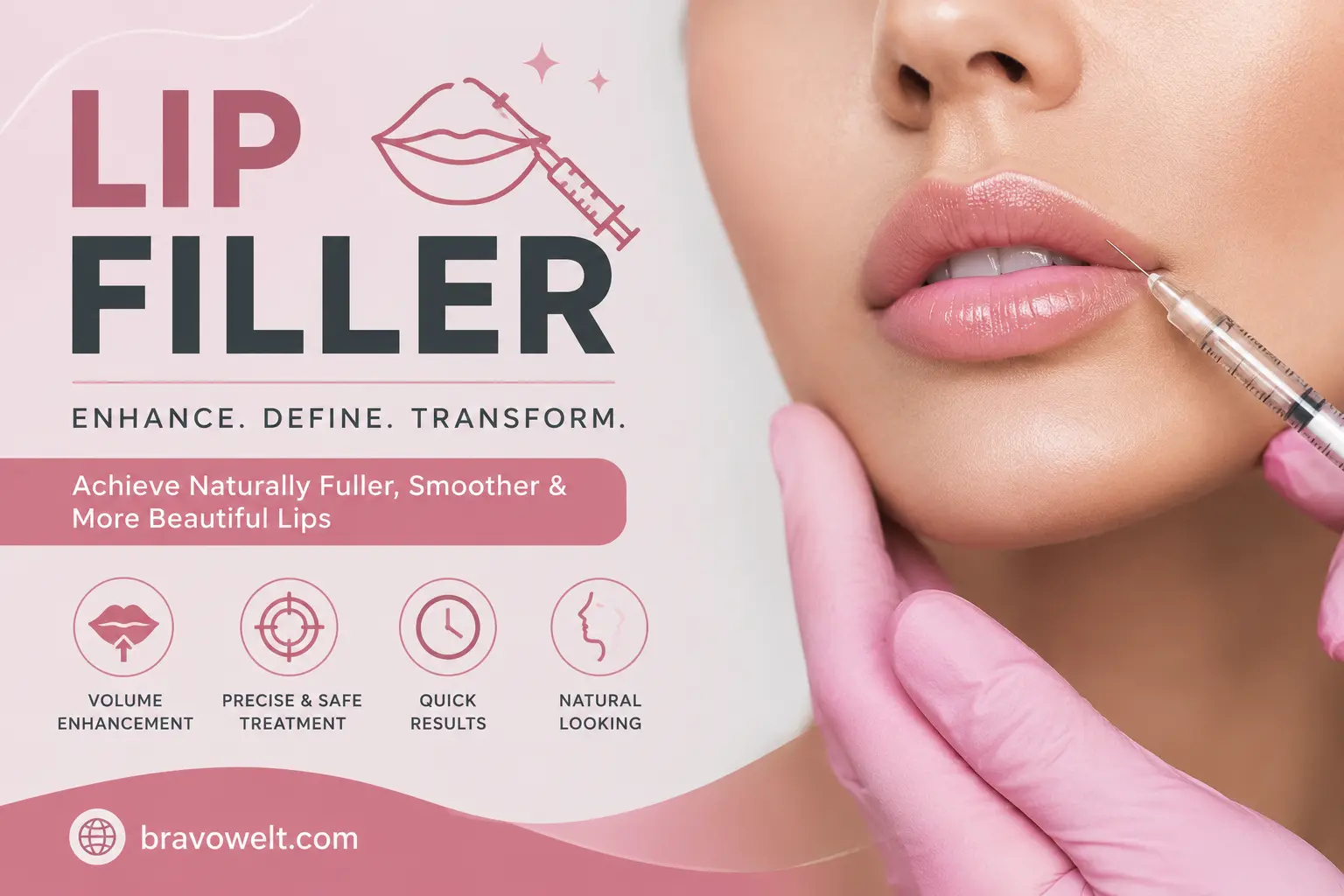
Lip filler is one of the most widely discussed cosmetic injectable treatments for people who want fuller, more balanced, or better-defined lips. Lip filler can be used for subtle enhancement as well as more noticeable changes, but the best outcome is not simply about adding volume. A successful treatment should respect your natural facial proportions, lip anatomy, movement, and personal goals.
If you are completely new to cosmetic injectables, the process can seem confusing. You may be wondering what the treatment contains, whether it hurts, how long it lasts, what recovery looks like, or whether the results can still look like you. This guide explains the full journey in simple language—from understanding the treatment and preparing for an appointment to recovery, safety, maintenance, and realistic expectations.
Modern lip augmentation is most commonly performed using temporary hyaluronic acid-based dermal fillers. These products are designed to add controlled volume and shape, but the final result depends heavily on the product selected, the amount used, the anatomy being treated, and, most importantly, the skill and medical judgment of the injector.
What Is Lip Filler?
Lip filler is a cosmetic injectable treatment used to enhance the appearance of the lips. Depending on a person’s goals, it may add volume, improve the outline of the lips, refine the Cupid’s bow, restore volume that has changed with age, or improve visible asymmetry.
The treatment is commonly part of the broader category of dermal fillers. Unlike surgery, injectable augmentation does not involve incisions or permanent structural changes. The results are generally temporary, which gives patients the opportunity to reassess their appearance as the product gradually breaks down over time.
One important point is that fuller does not automatically mean better. The lips are a highly visible and mobile part of the face, so an appropriate treatment plan considers how they look at rest, when smiling, and while speaking. A conservative approach can often produce a softer and more natural-looking enhancement.
How Does Lip Filler Work?
Most modern injectable products used for the lips contain hyaluronic acid, a substance that occurs naturally in the body. Hyaluronic acid can bind water, which is one reason it is useful for creating hydration, softness, and controlled volume within the tissue.
During treatment, a trained medical professional places small amounts of product into carefully selected areas of the lips. The placement may focus on the body of the lip, the border, the Cupid’s bow, or areas where better balance is desired. The technique is tailored to the individual’s anatomy rather than following a single pattern for everyone.
The effect is visible soon after treatment, but the appearance immediately afterward is not necessarily the final result. Early swelling can temporarily make the lips look larger or less even than they will once the tissue settles. This is why a proper assessment of the final outcome should wait until the initial recovery period has passed.
What Is Lip Filler Made Of?
The most commonly used products for lip augmentation today are hyaluronic acid-based fillers. Hyaluronic acid is a naturally occurring substance found in the body and is widely used in aesthetic medicine because it can provide temporary, adjustable enhancement.
Different products can vary in thickness, flexibility, firmness, and the way they integrate into tissue. A product that is suitable for one area of the face may not be the best choice for the lips. The lips require products and techniques that account for their delicate tissue and constant movement.
Some people assume that every injectable product works the same way, but that is not the case. The appropriate product and amount should be selected after an individual consultation. The brand name alone should never be the deciding factor; anatomy, treatment goals, medical history, and injector expertise are more important.
Types of Lip Filler
Hyaluronic acid-based products are the most common choice for lip enhancement because they are temporary and can be managed differently from permanent materials. Within this category, products may differ in their texture and intended use.
A softer, more flexible formulation may be chosen when the goal is subtle hydration and gentle volume. Other formulations may provide more structure or definition when appropriate. The right option depends on whether the priority is volume, contour, symmetry, or an overall refinement of the lips.
Permanent or inappropriate materials should not be viewed as a shortcut to a better result. Safety, reversibility, and suitability are major considerations when choosing an injectable treatment. A qualified provider should explain what is being used, why it is being recommended, and what you can realistically expect from it.
Benefits of Lip Filler
The potential benefits depend on the individual’s starting anatomy and treatment plan. Some people want a very subtle change, while others want to restore lost volume or improve the definition of the lip border.
Possible benefits may include:
- Increased lip volume and fullness
- Improved definition of the lip border
- Better balance between the upper and lower lips
- Improvement in mild visible asymmetry
- Restoration of volume that may decrease with age
- A more hydrated or smooth-looking appearance
- A non-surgical and generally temporary approach to lip enhancement
The most valuable benefit for many people is customization. Treatment can be planned around a specific goal instead of trying to copy someone else’s lips. Good aesthetic planning focuses on harmony with the rest of the face rather than chasing a single trend.
Why Do People Get Lip Filler?
People choose cosmetic lip enhancement for many different reasons. Some have naturally thin lips and want more volume, while others are happy with their overall size but would like a clearer shape or better symmetry.
Age-related changes can also play a role. Over time, the lips may lose some of their previous fullness, and the border between the lips and surrounding skin may become less defined. A carefully planned treatment may help address these changes without creating an exaggerated appearance.
It is also common for people to seek a confidence boost. However, realistic expectations are essential. Cosmetic treatment can change a feature, but it should not be presented as a solution to deeper emotional concerns or pressure to match unrealistic social media images.
Who Is a Good Candidate for Lip Filler?
A good candidate is generally someone who is in appropriate health, understands that the results are temporary, and has realistic expectations about what can be achieved with injectable treatment. A consultation is necessary because suitability cannot be determined from a photograph alone.
The provider should assess factors such as lip anatomy, skin and tissue quality, facial proportions, previous cosmetic procedures, allergies, medications, and relevant medical history. Your goals should also be discussed in detail.
A good candidate is not necessarily someone with a particular lip shape. Every face is different. The best treatment plan is one that works with the person’s existing anatomy instead of forcing the lips into a trend that may not suit them.
Who Should Avoid or Postpone Lip Filler?
There are situations in which treatment may need to be postponed or may not be appropriate. An active infection, irritation, or certain conditions affecting the treatment area should be discussed before any procedure is performed.
People who are pregnant or breastfeeding are commonly advised to postpone elective cosmetic injectable treatment because appropriate safety data may be limited. Anyone with a significant medical condition, a history of serious allergic reactions, or previous complications from injectable treatments should disclose this information during the consultation.
Certain medications and supplements may also affect bruising or bleeding risk. Do not stop prescribed medication on your own for a cosmetic procedure. Instead, discuss everything you take with a qualified healthcare professional who can provide advice based on your individual circumstances.
Lip Filler for Natural-Looking Results
Natural-looking results do not mean that the lips cannot look enhanced. They mean that the enhancement should still fit the person’s face and avoid an obviously overfilled or distorted appearance.
Several factors influence a natural result:
- Starting lip anatomy
- Facial proportions
- The amount of product used
- Product selection
- Injection placement
- The patient’s individual goals
- A willingness to build volume gradually when needed
One of the most common mistakes is trying to achieve a dramatic change in a single appointment when the tissue or anatomy is not suited to it. A gradual approach can give the provider and patient an opportunity to evaluate how the lips settle before deciding whether additional treatment is necessary.
Lip Filler for Volume and Fuller Lips
Adding volume is one of the most common reasons people consider lip augmentation. However, volume does not have to be distributed evenly throughout the lips. Where volume is placed can influence shape, projection, and overall balance.
For example, adding too much product to one area may create heaviness rather than a refined result. The upper and lower lips also do not need to be identical. Natural lips have individual proportions and movement patterns that should be considered during planning.
The goal should be appropriate volume rather than the largest possible change. A good consultation helps determine what can be achieved safely and aesthetically based on the existing tissue.
Lip Filler for Lip Shape and Definition
Volume is only one part of lip aesthetics. Some people are more interested in improving shape, defining the border, or creating better visibility around features such as the Cupid’s bow.
Small, strategically placed amounts of injectable product may be used to refine these areas when appropriate. This requires precision because the lips contain delicate structures, and excessive definition can look unnatural.
Shape goals should be discussed clearly before treatment. Bringing reference images can help communicate preferences, but the final plan should be based on your own anatomy rather than a promise to reproduce another person’s appearance exactly.
Lip Filler for Lip Asymmetry
Mild asymmetry is extremely common and is often part of normal facial anatomy. One side of the lip may be slightly fuller, higher, or shaped differently from the other.
Carefully planned treatment may improve visible asymmetry, but complete mathematical symmetry is not always realistic or desirable. The face naturally moves differently on each side, and photographs can sometimes exaggerate small differences.
A qualified injector will evaluate the lips from multiple angles and consider movement as well as appearance at rest. The aim is improved balance rather than perfection.
Understanding Lip Anatomy Before Lip Filler
The lips are more complex than they may appear. They contain skin, mucosal tissue, muscle, blood vessels, nerves, and distinct anatomical zones that influence both appearance and safety.
Important visual features include the upper and lower lip, the vermilion border, the Cupid’s bow, and the relationship between the lips and surrounding facial structures. These features vary significantly from person to person.
This is one reason why cosmetic injections should not be treated as a simple beauty service. Understanding anatomy is essential for choosing appropriate placement, avoiding unnecessary trauma, and recognizing complications if they occur.
How Much Lip Filler Do You Need?
There is no single amount that is right for everyone. The appropriate quantity depends on your starting lip volume, tissue capacity, desired change, and whether the goal is volume, definition, or correction of asymmetry.
More product does not automatically create a better result. In some cases, placing too much material into a small area can lead to an unnatural appearance, excessive projection, or an overfilled look.
A thoughtful provider may recommend starting conservatively and reassessing after the lips have settled. This approach can be especially helpful for first-time patients who are unsure how much change they want.
Choosing the Right Lip Filler for Your Goals
The right treatment plan begins with a clear understanding of what you want to change. Do you want more fullness, a clearer border, better symmetry, restoration of lost volume, or a subtle overall enhancement?
The provider should then assess whether those goals are compatible with your anatomy. A good plan may involve choosing a particular type of hyaluronic acid product, adjusting the amount used, or recommending a staged approach.
Be cautious of one-size-fits-all packages that promise the same result for every person. High-quality aesthetic treatment should be individualized, and the injector should be able to explain the reasoning behind the proposed plan in language you understand.
What Happens During a Lip Filler Consultation?
A consultation should be more than a quick discussion about how much product you want. It is the stage where important safety and aesthetic decisions are made.
A thorough consultation may include:
- Discussion of your cosmetic goals
- Review of your medical history
- Questions about allergies and previous treatments
- Review of medications and relevant supplements
- Assessment of lip and facial anatomy
- Discussion of potential benefits and limitations
- Explanation of common side effects and important risks
- Planning for aftercare and follow-up
You should feel comfortable asking questions. If you do not understand what is being recommended or feel pressured to proceed, it is reasonable to take more time before making a decision.
How to Prepare for Lip Filler
Preparation should begin with the instructions provided by your treating professional. These instructions may differ depending on your medical history and the treatment planned.
Be honest about all medications, supplements, previous procedures, allergies, and health conditions. Do not hide information because you think it may prevent treatment; accurate information helps the provider make safer decisions.
It is also wise to schedule treatment with enough time before major events. Swelling or bruising can occur, so avoid assuming that the lips will look fully settled immediately after the appointment.
What Happens During the Lip Filler Procedure?
The procedure usually begins with a final review of the treatment plan and preparation of the area. Depending on the product and provider’s approach, a topical anesthetic or another form of pain management may be used.
The provider then injects carefully selected amounts of product into specific areas using an appropriate technique. You may feel pressure, a brief pinch, or a stinging sensation during parts of the procedure.
The lips may be gently assessed during treatment to evaluate symmetry and distribution. Once the procedure is complete, the provider should give clear aftercare instructions and explain what changes are expected during the first few days.
How Long Does a Lip Filler Appointment Take?
The injection portion itself is often relatively short, but a complete appointment should allow enough time for consultation, preparation, treatment, and aftercare instructions.
For many patients, the overall visit may take around 30 minutes to an hour, depending on whether it is a first appointment, how much consultation is required, and the complexity of the treatment plan.
Do not judge the quality of care by how quickly the appointment is finished. A rushed procedure can leave insufficient time for assessment, informed consent, or discussion of safety.
Does Lip Filler Hurt?
Pain is subjective, so the experience varies from person to person. The lips are sensitive, and some discomfort during injections is possible.
Many modern injectable products contain lidocaine, and providers may also use topical numbing methods or other appropriate pain-control options. Even with numbing, you may still notice pressure, pinching, or brief stinging.
If you are anxious about discomfort, discuss this before the appointment. Knowing what to expect and understanding the available comfort measures can make the experience less stressful.
For the latest updates and guides, visit our Pelota Libre.
Lip Filler Results: What to Expect
The lips usually look fuller immediately after treatment, but the first appearance should not be considered the final result. Swelling, tenderness, and temporary unevenness can affect how the lips look during the early recovery period.
As the tissue settles, the appearance generally becomes easier to evaluate. The exact timeline varies between individuals and can depend on the amount of product, injection technique, and how your body responds.
It is important not to make a rushed judgment based on the first few hours after treatment. If you have concerns, follow the instructions provided by your healthcare professional and attend any recommended follow-up appointment.
When Will You See Results After Lip Filler?
Initial results are visible immediately because the injectable product adds volume at the time of treatment. However, early swelling can make the lips appear more pronounced than the eventual settled result.
Many people notice changes over the following days as swelling improves. It can take up to around two weeks for common early effects to fully settle, although individual recovery varies.
If you are planning treatment before a wedding, holiday, photoshoot, or other important event, give yourself a reasonable buffer rather than booking at the last minute.
How Long Does Lip Filler Take to Settle?
The settling process is not the same for every person. Mild swelling and tenderness often improve during the first few days, while bruising or residual swelling may take longer to resolve.
A general rule is to allow roughly two weeks before judging the final early outcome. During this time, the lips may change slightly from day to day as the tissue recovers.
Avoid repeatedly touching, pressing, or trying to reshape the area unless your provider specifically instructs you to do so. Unnecessary manipulation can irritate the tissue and may interfere with the intended recovery process.
How Long Does Lip Filler Last?
Results are temporary, and longevity varies according to the product used, the amount placed, the person’s metabolism, and the characteristics of the treated area.
Hyaluronic acid fillers used in cosmetic medicine can last for several months, with many filler products generally providing results within a range of approximately four to twelve months depending on the formulation and treatment area. The exact duration for an individual cannot be guaranteed.
The best way to estimate longevity for your specific treatment is to ask the provider about the product being recommended and why it is appropriate for your goals.
Factors That Affect How Long Lip Filler Lasts
Several factors can influence how long the result remains noticeable. These include the type and formulation of the product, the amount used, individual metabolism, lip movement, and the person’s natural tissue characteristics.
Lifestyle and repeated facial movement may also contribute to how quickly the visible effect changes over time. However, there is no reliable trick that guarantees a cosmetic injectable will last a specific number of months.
Regular maintenance should be based on your appearance and professional assessment rather than automatically repeating treatment on a fixed schedule without evaluating whether more product is actually needed.
When Do You Need a Lip Filler Top-Up?
A top-up may be considered when the effect has gradually decreased and you still want to maintain the enhancement. The timing varies widely from one person to another.
It is not always necessary to wait until all visible enhancement has disappeared, but repeated treatment should also not become automatic. Overfilling can occur when new product is added without properly assessing what remains.
A responsible provider will evaluate your current lips and discuss whether additional treatment is appropriate rather than simply injecting more because a certain amount of time has passed.
Lip Filler Recovery Time
One advantage of non-surgical injectable treatment is that many people can return to ordinary activities relatively quickly. However, “little downtime” does not mean there is no recovery period.
You may experience swelling, tenderness, redness, or bruising. These effects are usually temporary, but they can be inconvenient and should be considered when planning your appointment.
Recovery is also the time when you should pay attention to your body. Understanding the difference between expected short-term effects and symptoms that require urgent medical assessment is an important part of treatment safety.
Lip Filler Swelling: What Is Normal?
Swelling is one of the most common short-term responses after injectable lip augmentation. It may make the lips look larger or less symmetrical than expected during the first stage of recovery.
Mild tenderness and temporary unevenness can also occur. In many cases, these effects improve naturally as the tissue recovers.
Normal does not mean that every symptom should be ignored. Severe pain, unusual skin discoloration, or symptoms that concern you should be discussed with the treating provider promptly because rare complications require early assessment.
How Long Does Lip Filler Swelling Last?
For many people, the most noticeable swelling improves within the first few days, although minor swelling can last longer. Bruising may also take additional time to fade.
A practical expectation is that early recovery can take up to about two weeks to fully settle. Your individual timeline may be shorter or longer depending on your body and the details of the treatment.
If swelling is becoming worse rather than improving, or is accompanied by significant pain or unusual changes in skin color, contact a qualified medical professional rather than waiting for it to resolve on its own.
Lip Filler Aftercare
Aftercare should always follow the specific instructions given by the person who performed the procedure. General recommendations may vary depending on the product, technique, and your individual circumstances.
Good aftercare usually focuses on allowing the tissue to recover without unnecessary irritation. You may be advised to use gentle cooling measures and to avoid activities that significantly increase heat or strain during the early recovery period.
The most important rule is simple: do not follow random social media advice if it conflicts with instructions from a qualified medical professional who knows what treatment you received.
What to Do After Lip Filler
After treatment, focus on a calm and uncomplicated recovery. Follow the aftercare plan you were given and monitor the area without repeatedly checking or manipulating it.
Helpful steps may include:
- Follow all provider-specific instructions
- Use gentle cooling if recommended
- Stay hydrated and maintain normal nutrition
- Keep the treatment area clean
- Attend any recommended follow-up appointment
- Contact your provider if something feels unusual or concerning
Taking clear photos only when necessary can help you notice changes over time, but constantly comparing your lips in mirrors or selfies during the swelling stage can create unnecessary anxiety.
What to Avoid After Lip Filler
Your provider may recommend temporarily avoiding certain activities that could increase swelling, irritation, or pressure on the treated area.
Depending on your individual instructions, this may include avoiding strenuous exercise immediately after treatment, excessive heat exposure, unnecessary touching or massage, and activities that place significant pressure on the lips.
Alcohol and smoking-related questions should also be discussed with your provider because recommendations may vary. The safest approach is to receive personalized aftercare guidance instead of relying on a universal checklist.
Lip Filler Side Effects
Temporary side effects are relatively common after injectable treatment. These may include swelling, tenderness, redness, bruising, and temporary firmness or unevenness.
These effects often improve as the tissue heals. A recent evidence review of hyaluronic acid lip augmentation found that minor adverse effects were common, while serious events were uncommon, reinforcing the importance of distinguishing normal recovery from complications that need treatment.
Your provider should explain expected side effects before the procedure so that you know what is normal for the early recovery period and when you should ask for help.
Lip Filler Risks and Complications
Every injectable procedure carries risks, even when performed correctly. Possible complications can include infection, allergic reactions, persistent lumps or irregularities, prolonged swelling, and unwanted aesthetic outcomes.
One of the most serious but uncommon complications involves compromised blood flow caused by an injection-related vascular event. This requires urgent medical assessment and treatment.
Risk cannot be reduced to zero, but it can be managed through appropriate patient selection, strong knowledge of facial anatomy, proper technique, suitable products, and the ability to recognize and treat complications quickly.
When to Seek Medical Help After Lip Filler
Contact your provider promptly if you experience symptoms that are significantly different from the expected recovery process. Do not assume that severe or unusual symptoms are simply part of normal swelling.
Seek urgent medical assessment for severe or increasing pain, marked changes in skin color, unusual blanching or dark discoloration, rapidly worsening swelling, signs of infection, or any symptom that your provider has identified as an emergency warning sign.
A trustworthy clinic should give patients clear information about who to contact after treatment. Safety planning should not end when you leave the appointment.
Can Lip Filler Be Dissolved?
Hyaluronic acid-based fillers have an important advantage: in appropriate circumstances, they can be treated with an enzyme called hyaluronidase to break down hyaluronic acid.
Dissolving treatment is a medical decision and is not a casual “undo button.” It may be considered for certain unwanted results or complications, but the approach depends on the product, the location, the clinical situation, and the provider’s assessment.
If you are considering treatment, ask beforehand what type of product is being used and how the practice manages complications. Knowing the safety plan in advance is part of making an informed decision.
What Happens If You Don’t Like Your Lip Filler Results?
The first step is not to panic. Early swelling can temporarily change the appearance, so immediate post-treatment results should not always be judged as final.
If the appearance still concerns you after an appropriate settling period, speak with the treating provider. Options may depend on whether the issue involves swelling, asymmetry, product placement, excessive volume, or another factor.
Avoid trying to correct the problem yourself or immediately seeking additional injections from multiple providers without a proper assessment. A careful evaluation is the safest starting point.
How to Choose a Qualified Lip Filler Provider
Choosing the person who performs the treatment is one of the most important decisions you will make. Price, social media popularity, or a dramatic before-and-after gallery should not be the only factors.
Look for a qualified medical professional whose training, credentials, experience, and scope of practice are appropriate for performing cosmetic injections in your location. The provider should be willing to discuss risks as openly as benefits.
Useful questions include:
- What training and experience do you have with cosmetic injectables?
- What product are you recommending and why?
- How do you assess individual anatomy?
- What complications can occur?
- What is your emergency protocol?
- Who can I contact after the procedure if I have concerns?
A professional who answers questions clearly and does not pressure you into treatment is generally a better sign than someone who focuses only on selling a package.
Lip Filler Safety and Why Your Provider Matters
Injectable lip augmentation is a medical procedure, not simply a beauty appointment. The person performing it needs appropriate knowledge of anatomy, product handling, sterile technique, and complication management.
A medically appropriate environment is also important. The provider should have systems for informed consent, patient assessment, documentation, and responding to unexpected complications.
The safest result is not necessarily the cheapest or fastest one. Choosing a qualified provider and prioritizing careful planning can make a meaningful difference to both your experience and your outcome.
How Much Does Lip Filler Cost?
The cost of treatment varies considerably depending on where you live, the provider’s qualifications and experience, the product used, the amount required, and the complexity of the treatment.
Cost-related searches are common because patients understandably want to know what they will pay. However, comparing prices without understanding what is included can be misleading.
A very low price should not be the main reason to choose an injectable provider. Ask what product is being used, how much is included, whether consultation and follow-up are provided, and whether the treatment is being performed in an appropriate medical setting.
Factors That Affect Lip Filler Cost
Several variables can affect the final price of treatment:
- Geographic location and local market costs
- Provider qualifications and experience
- Type and brand of injectable product
- Amount of product required
- Complexity of the treatment plan
- Whether follow-up care is included
The cheapest option may not provide the same level of assessment, product quality, or safety support. Instead of asking only, “What is the price?” it can be more useful to ask, “What am I receiving for this cost, and who is responsible for my care?”
Lip Filler vs Lip Flip
Although both procedures can affect the appearance of the lips, they work differently. Injectable dermal augmentation adds volume or changes contour through a filler product, while a lip flip generally uses botulinum toxin to relax specific muscles so that more of the upper lip may become visible.
A lip flip does not create the same type of volume. It may suit a person whose primary concern relates to the way the upper lip rolls inward during expression, while injectable augmentation may be more appropriate for someone seeking added fullness or shape.
Neither option is universally better. The right choice depends on the concern being treated, the desired result, and an assessment by a qualified professional.
Lip Filler Before and After: What to Expect
Before-and-after images can be useful for understanding a provider’s aesthetic style, but they should be interpreted carefully. Lighting, angles, facial expression, swelling, and photography techniques can all affect how dramatic a result appears.
Your own result may differ from someone else’s because lip anatomy and treatment goals are unique. A good provider should discuss likely outcomes rather than promising an identical transformation.
When reviewing photographs, look for consistency and natural facial balance. The most dramatic image is not necessarily evidence of the highest-quality treatment.
How to Maintain Your Lip Filler Results
Maintenance is usually about reassessment rather than constantly adding more volume. Temporary injectable products gradually change over time, and your lips should be evaluated before deciding whether another treatment is needed.
A sensible maintenance plan may include periodic consultations, realistic timing for repeat treatment, and avoiding unnecessary overcorrection. Your aesthetic preferences may also change, so each appointment should begin with a fresh discussion rather than automatically repeating the previous treatment.
Healthy lifestyle habits support overall skin and tissue health, but no skincare routine can permanently stop an injectable product from gradually breaking down. The best maintenance strategy is individualized and based on how your lips actually look and feel over time.
FAQs
Is lip augmentation permanent?
Most modern hyaluronic acid-based injectable treatments are temporary. The visible effect gradually decreases over time, although the exact duration varies between individuals and products.
Can lip filler look natural?
Yes. Natural-looking results are usually achieved through appropriate product selection, conservative planning, precise placement, and respect for the person’s existing anatomy and facial proportions.
How long does swelling last after lip filler?
The most noticeable swelling often improves within a few days, but complete settling can take up to around two weeks. Individual recovery times vary.
Can I exercise after lip filler?
Your provider may advise avoiding strenuous exercise immediately after treatment. Follow the specific aftercare instructions you receive because recommendations can depend on your individual situation.
Can you wear lipstick after lip filler?
Ask your provider for personalized guidance. The lips may be tender immediately after treatment, and hygiene and unnecessary pressure on the area should be considered during early recovery.
Is it normal for lips to look uneven after treatment?
Temporary unevenness can occur because swelling does not always develop equally on both sides. However, severe asymmetry, worsening symptoms, or anything concerning should be discussed with the treating provider.
Can lip filler be dissolved?
Hyaluronic acid-based products can potentially be treated with hyaluronidase in appropriate clinical situations. Dissolving should only be performed following assessment by a qualified healthcare professional.
What is the most important thing to consider before getting lip filler?
Choose a qualified provider, understand the risks and limitations, and make sure your treatment plan is based on your own anatomy and realistic goals rather than pressure from trends or social media.
Conclusion
Lip filler can be an effective option for people who want to enhance volume, shape, definition, or symmetry without undergoing surgery. However, the treatment is not just about choosing a product or deciding how much volume you want. Good results begin with understanding your anatomy, setting realistic expectations, and choosing a qualified medical professional.
For someone considering treatment for the first time, the most important step is a thorough consultation. You should understand what is being injected, why it is being recommended, what recovery may involve, how long the results may last, and what the potential risks are.
The best outcome is one that feels appropriate for you—not one that simply follows a trend. A careful, individualized approach, combined with realistic expectations and proper attention to safety, gives you the strongest foundation for making an informed decision.
For the latest updates and guides, visit our Singing Lessons.