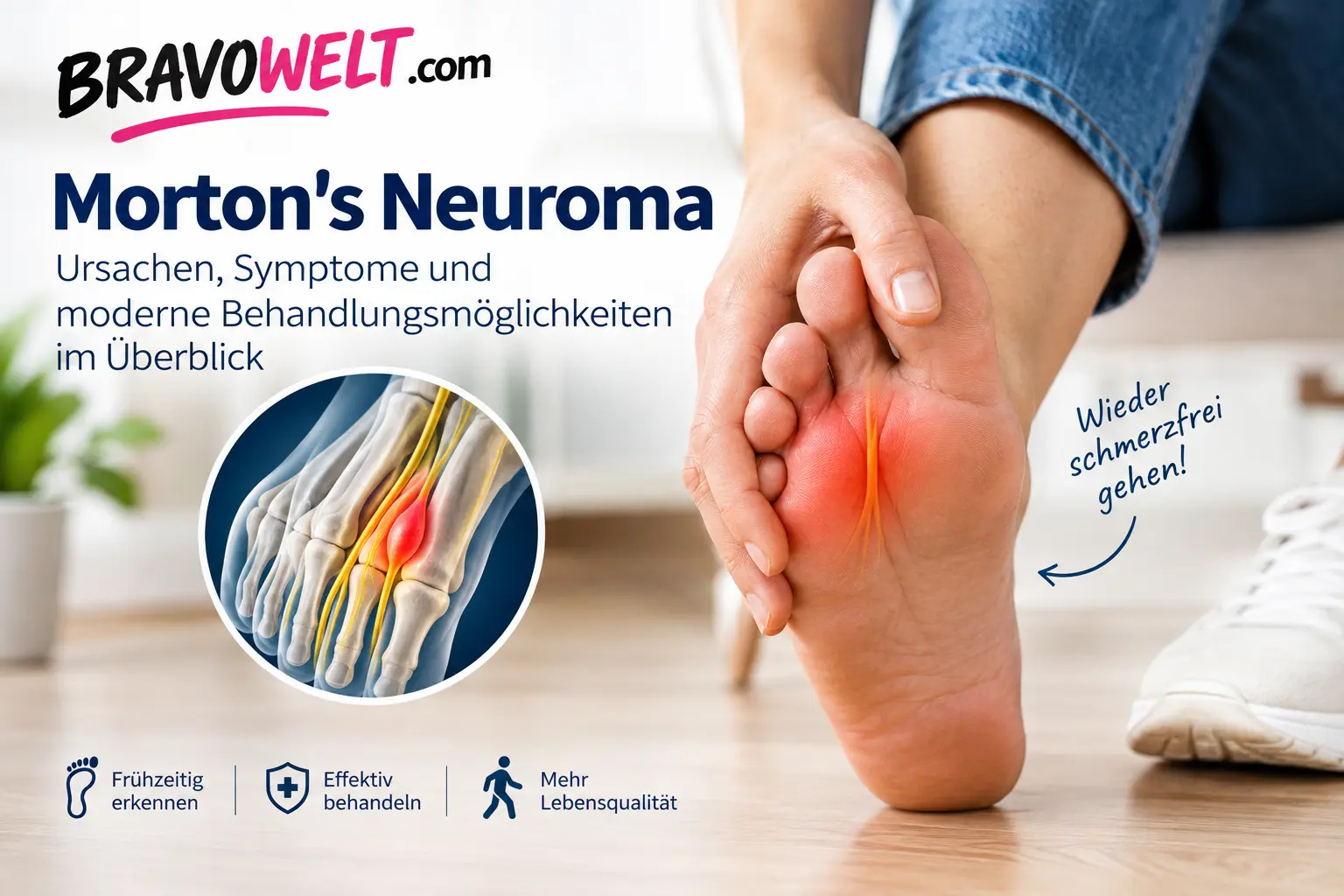
Morton’s neuroma is a painful condition affecting the forefoot, usually around the space between the third and fourth toes. Despite the word “neuroma,” it is not generally considered a true tumor. Instead, it involves irritation, thickening, and enlargement of tissue around an interdigital nerve, often related to repeated pressure or compression.
If you have burning pain in the ball of your foot, tingling in nearby toes, or a strange feeling as though there is a small stone inside your shoe, Morton’s neuroma may be one possible explanation. The good news is that treatment does not automatically mean surgery. Many people can improve symptoms by changing footwear, reducing activities that aggravate the forefoot, and using appropriate padding or orthotics. More persistent cases may require injections, minimally invasive procedures, or surgery.
This guide explains the condition from the beginning, including what causes it, what it feels like, how doctors diagnose it, which treatments are available, what recovery involves, and when professional evaluation is important.
What Is Morton’s Neuroma?
Morton’s neuroma is a painful forefoot condition involving one of the nerves that runs toward the toes. It most commonly affects the interdigital nerve in the space between the third and fourth toes, although other spaces can also be involved.
The nerve passes between the metatarsal bones. Repeated pressure in this area can irritate the nerve and the surrounding tissues. Over time, the tissue around the nerve can become thicker, which may make the nerve more sensitive to pressure.
This explains why activities such as walking, running, jumping, or wearing narrow footwear can make symptoms worse.
The condition is also called an interdigital neuroma, intermetatarsal neuroma, or Morton neuroma.
It is important to understand that the name can be confusing. The condition is not the same as a cancerous growth, and the term “neuroma” does not mean that you have a dangerous tumor.
Where Does Morton’s Neuroma Occur?
The most common location is the third web space, which is the area between the third and fourth toes.
This area is particularly vulnerable because the interdigital nerve passes beneath and between the metatarsal heads. Pressure from footwear and movement can repeatedly compress the nerve.
Less commonly, the condition can occur in another web space, such as between the second and third toes.
Where the pain is located can provide an important clue, but location alone cannot confirm the diagnosis. Other conditions can cause similar forefoot pain, so a proper examination is important when symptoms persist.
What Does Morton’s Neuroma Feel Like?
The sensation can vary from person to person.
Some people describe:
- Burning pain in the ball of the foot
- Sharp or stabbing pain
- Shooting pain toward the toes
- Tingling
- Pins-and-needles sensations
- Numbness in nearby toes
- A feeling that something is stuck inside the shoe
- A pebble, marble, or small stone sensation under the forefoot
- Pain that becomes stronger during walking or running
- Discomfort when wearing narrow or high-heeled shoes
A particularly useful clue is that symptoms may improve after taking off your shoes or resting the foot.
Why does it sometimes feel like a pebble is inside the shoe? The irritated interdigital nerve can produce unusual pressure and sensory signals, creating the sensation that there is an object beneath the forefoot even when nothing is there.
Morton’s Neuroma Symptoms
Symptoms usually develop in the forefoot rather than the heel or the middle of the arch.
The most common symptom is pain around the ball of the foot. It may start only during certain activities and later become easier to trigger.
Burning or Sharp Forefoot Pain
The pain may feel burning, stabbing, shooting, or electric. It can spread toward the adjacent toes.
Tingling and Numbness
Because an interdigital nerve is involved, tingling or numbness may develop in the toes supplied by that nerve.
Pain While Walking
Walking puts pressure on the metatarsal heads and can increase symptoms.
Pain During Running or Exercise
Running, jumping, dancing, and other high-impact activities can repeatedly load the forefoot and aggravate symptoms.
The Pebble-in-the-Shoe Feeling
Some people feel as if they are walking on a marble, pebble, or folded sock.
Clicking or Forefoot Sensation
A clicking sensation may occur when the forefoot is compressed during examination. Clinicians may refer to this as a Mulder’s click.
Symptoms That Improve After Removing Shoes
If tight shoes trigger the pain and removing them provides relief, footwear pressure may be contributing to the symptoms.
Common Causes and Risk Factors
There is not always one identifiable cause.
The exact mechanism is not completely understood, but repeated pressure or irritation around an interdigital nerve is strongly associated with the condition.
Common contributors include:
- Narrow shoes
- Tight toe boxes
- High heels
- Repetitive forefoot loading
- Running
- High-impact sports
- Certain foot shapes
- Bunions
- Hammertoes
- Flat feet
- High arches
- Repetitive pressure on the metatarsal area
Footwear matters because narrow shoes can squeeze the toes together and increase pressure around the metatarsal heads.
High heels can also shift more body weight toward the front of the foot, increasing forefoot loading.
Is Morton’s Neuroma a Tumor?
No. Despite its name, Morton’s neuroma is generally not considered a true tumor.
The term “neuroma” historically refers to the enlarged or thickened tissue surrounding an irritated nerve. Modern medical descriptions commonly characterize it as a damaged, enlarged, or irritated interdigital nerve rather than a neoplastic tumor.
This distinction matters because someone who sees the word “neuroma” may immediately worry about cancer. That is not what this condition means.
However, persistent or unexplained foot pain should still be evaluated because several other conditions can cause similar symptoms.
How Morton’s Neuroma Develops
Think of the forefoot as a small, tightly packed area where bones, joints, ligaments, tendons, blood vessels, and nerves work together.
An interdigital nerve travels between the metatarsal bones toward the toes. Repeated compression can irritate the nerve and surrounding tissues.
A simplified progression can look like this:
- Repeated pressure affects the forefoot.
- The interdigital nerve becomes irritated.
- Surrounding tissue becomes inflamed or thickened.
- The nerve becomes increasingly sensitive.
- Walking or tight footwear triggers pain more easily.
- Persistent irritation can produce chronic symptoms.
This does not mean every person follows exactly the same progression.
Who Is Most at Risk?
Morton’s neuroma can affect different types of people, but certain situations increase mechanical pressure on the forefoot.
Higher-risk groups may include people who:
- Frequently wear narrow or high-heeled shoes
- Run regularly
- Participate in high-impact sports
- Have bunions
- Have hammertoes
- Have flat feet
- Have high arches
- Perform activities that repeatedly load the ball of the foot
- Wear restrictive footwear for work or sport
Sports such as running can expose the forefoot to repeated impact, while sports requiring tight footwear can add additional compression.
How Is Morton’s Neuroma Diagnosed?
Diagnosis usually begins with your symptoms and a physical examination.
A healthcare professional may ask:
- Where exactly does the pain occur?
- When did it begin?
- Does footwear affect it?
- Does walking or running make it worse?
- Do you experience tingling or numbness?
- Does removing your shoes improve the pain?
- Have you changed your activities because of the symptoms?
During the examination, the clinician may press around the ball of the foot, move the toes, and compress the forefoot to identify tenderness or a clicking sensation.
There is no single blood test that confirms the condition.
Imaging is used selectively, especially when the diagnosis is uncertain or another cause of forefoot pain needs to be excluded.
Physical Examination and Mulder’s Sign
A clinician may squeeze the forefoot from the sides while applying pressure between the metatarsal heads.
A palpable or audible click associated with pain can be known as a Mulder’s click or Mulder’s sign.
It can support the diagnosis, but it should not be treated as proof by itself. The complete clinical picture matters.
A good examination also checks for other sources of forefoot pain, including joint problems, stress injuries, plantar plate problems, and other nerve conditions.
X-Ray, Ultrasound, and MRI
Different imaging tests answer different questions.
X-Ray
An X-ray does not usually show the nerve itself well. However, it can help identify fractures, bone abnormalities, arthritis, or other structural problems that may cause forefoot pain.
A standing X-ray can be particularly useful when weight-bearing alignment or bone structure needs evaluation.
Ultrasound
Ultrasound can visualize soft tissues and may help confirm an interdigital neuroma.
It can also be useful when an injection needs image guidance.
MRI
MRI provides detailed images of soft tissues and can be useful when symptoms are atypical or when another condition needs to be investigated.
Does everyone with forefoot pain need an MRI? No. Imaging should be selected according to the symptoms and clinical examination rather than automatically ordered for every case.
Conditions That Can Mimic the Pain
Several conditions can produce pain in the ball of the foot.
These include:
- Metatarsalgia
- Plantar plate injury
- Stress fracture
- Intermetatarsal bursitis
- Arthritis
- Peripheral neuropathy
- Tendon problems
- Joint inflammation
- Other nerve disorders
This is one reason self-diagnosis can be difficult. Similar symptoms do not necessarily mean the same condition.
Morton’s Neuroma vs. Metatarsalgia
Metatarsalgia is a general term for pain in the ball of the foot, rather than a specific nerve condition.
Morton’s neuroma can cause forefoot pain that falls under the broader category of metatarsal-region pain, but the underlying mechanism is different.
Morton’s neuroma is associated with an interdigital nerve, while metatarsalgia can have multiple causes involving pressure, foot structure, activity, footwear, or other tissues.
Morton’s Neuroma vs. Plantar Fasciitis
Plantar fasciitis usually causes pain around the heel and bottom of the foot, often with significant discomfort during the first steps after waking.
Morton’s neuroma usually produces pain in the forefoot, particularly around the spaces between the toes.
The location and behavior of the pain can therefore help distinguish the two, although a clinician may need to examine the foot to determine the actual cause.
Morton’s Neuroma vs. Stress Fracture
A stress fracture is a small crack or injury in a bone caused by repetitive loading.
It may produce localized pain that worsens with activity and may be associated with tenderness directly over the affected bone.
Morton’s neuroma is a nerve-related problem, so burning, tingling, numbness, and shooting sensations may be more prominent.
Because these conditions can overlap in presentation, persistent pain after increased activity should not automatically be assumed to be a nerve problem.
How to Treat Morton’s Neuroma
Treatment depends on symptom severity, duration, activity level, foot structure, previous treatment, and how much the condition interferes with daily life.
Treatment often starts with conservative care rather than surgery.
A common progression is:
Footwear and activity changes → padding or orthotics → targeted treatment such as injections → specialist procedures or surgery when symptoms remain persistent.
Mayo Clinic describes footwear modification and reducing aggravating activities as first-line measures, with injections and surgery considered when appropriate.
Conservative Treatment Options
Conservative treatment aims to reduce pressure on the affected nerve and give irritated tissues an opportunity to settle.
Common approaches include:
- Wider shoes
- Lower heels
- Metatarsal pads
- Shoe inserts
- Orthotics
- Activity modification
- Ice
- Appropriate pain medication
- Physical therapy
- Stretching and strengthening when appropriate
Not every treatment works equally well for every person.
The most useful approach is usually the one that addresses the mechanical factors contributing to the symptoms.
Shoes and Footwear Changes
Changing footwear is one of the simplest ways to reduce forefoot pressure.
Look for shoes with:
- A wide toe box
- Enough length
- A low heel
- Adequate cushioning
- A comfortable forefoot
- Enough room for natural toe movement
Avoid shoes that squeeze the toes together.
High heels can increase pressure toward the forefoot, so reducing heel height may help decrease mechanical stress.
A shoe can look comfortable while still being too narrow. Your feet should have enough room to spread naturally rather than being forced into a pointed shape.
Metatarsal Pads and Orthotics
A metatarsal pad is designed to redistribute pressure around the metatarsal region rather than placing direct pressure on the painful spot.
Placement matters. A pad positioned incorrectly can fail to help or may make symptoms worse.
Orthotics can also be used to modify pressure distribution and foot mechanics.
Some people benefit from over-the-counter inserts, while others may require custom orthotics depending on their foot structure and symptoms.
Rest and Activity Modification
If running, jumping, dancing, or another activity consistently triggers pain, temporarily reducing that activity can help decrease mechanical irritation.
This does not necessarily mean complete inactivity.
A practical approach is to identify the activities that produce symptoms and reduce their intensity, frequency, or duration while maintaining comfortable movement where possible.
Returning to high-impact exercise too quickly may cause symptoms to return.
Exercises and Physical Therapy
Physical therapy may be useful when foot mechanics, calf flexibility, strength, balance, or movement patterns contribute to symptoms.
Depending on the individual assessment, a therapist may use:
- Calf stretching
- Foot and ankle mobility exercises
- Toe mobility
- Strengthening exercises
- Balance training
- Gait and movement assessment
- Activity modification strategies
Exercises should not be treated as a guaranteed cure. If an exercise consistently increases burning, shooting pain, or numbness, it should be reassessed rather than pushed through.
For the latest updates and guides, visit our Companion Movie.
Pain Relief and Home Care
Simple home measures can sometimes reduce symptoms.
Options may include:
- Resting from aggravating activities
- Wearing supportive, wide shoes
- Using an appropriate metatarsal pad
- Applying ice
- Using nonprescription pain medication when medically appropriate
Mayo Clinic notes that ice massage and nonprescription anti-inflammatory medicines may help relieve pain for some people.
NSAIDs such as ibuprofen or naproxen are not appropriate for everyone. People with certain medical conditions, medication interactions, kidney problems, stomach ulcers, bleeding risks, or other contraindications should ask a healthcare professional before using them.
Best Shoes for Morton’s Neuroma
The best footwear is generally footwear that reduces pressure on the forefoot.
Important features include:
- Wide toe box
- Low heel
- Comfortable cushioning
- Adequate forefoot width
- Flexible but supportive construction
- Correct size
The goal is not to find a magical shoe brand. The goal is to reduce compression and allow the toes enough room.
A shoe that feels comfortable for five minutes may still cause problems after several hours of walking, so comfort should also be evaluated during normal daily activity.
Morton’s Neuroma Injections
When footwear, activity changes, padding, and other conservative measures do not provide enough relief, a clinician may consider an injection.
Different substances have been studied, including corticosteroids, local anesthetics, alcohol-based sclerosants, capsaicin, and other agents.
Evidence varies between treatments, and not every injection has the same level of supporting research. A systematic review of infiltrative treatments found evidence for several approaches but also noted that some treatments require additional research.
Corticosteroid Injections
Corticosteroid injections can reduce pain and inflammation around the affected area.
An ultrasound-guided injection may be used to improve targeting.
Evidence summarized in a 2024 Cochrane review suggests that ultrasound-guided corticosteroid plus local anesthetic injections may improve pain and function, although the overall evidence base for many treatments remains limited.
Potential risks can include local tissue changes, skin discoloration, fat-pad atrophy, infection, and temporary or incomplete symptom relief.
Repeated injections should be discussed carefully with the treating clinician.
Alcohol Injections
Alcohol or other sclerosing injections have been studied as a way to reduce nerve-related pain.
Some studies report symptom improvement, but evidence is less consistent than many online treatment claims suggest. A systematic review found alcohol injections generally well tolerated but concluded that additional research is needed to clarify their effects.
Patients should therefore discuss expected benefits, uncertainty, alternatives, and possible side effects before choosing this approach.
Minimally Invasive Treatment Options
For persistent symptoms, some specialists may consider procedures designed to reduce nerve pain without immediately proceeding to surgical removal.
These may include:
- Radiofrequency ablation
- Cryoablation
- Other image-guided nerve procedures
The availability of these treatments varies by location and specialist expertise.
The evidence is also evolving, so these procedures should be considered based on individual circumstances rather than presented as universally superior to established treatments.
Radiofrequency Ablation
Radiofrequency ablation (RFA) uses controlled thermal energy to disrupt pain signals from the affected nerve.
Research published in 2025 reviewed eight studies involving 237 patients and found substantial pain reduction overall, although the included studies varied and the evidence base was still relatively small.
More recent evidence published in 2026 reported moderate pain and functional improvement in selected patients, while approximately one-quarter eventually required surgery. This highlights an important point: RFA can be an intermediate treatment option for some people, but it does not guarantee that surgery will never be needed.
Cryoablation and Other Procedures
Cryoablation uses very low temperatures to disrupt the targeted nerve and reduce pain transmission.
Other procedures may attempt to reduce nerve compression without removing the nerve itself.
These approaches can be attractive because they may avoid immediate neurectomy, but their suitability depends on the diagnosis, anatomy, symptoms, available expertise, and evidence supporting the particular technique.
When Is Surgery Needed?
Surgery may be considered when:
- Pain remains significant despite conservative treatment
- Footwear changes have not provided adequate relief
- Orthotics or pads have not been sufficient
- Appropriate injections have failed or provided only temporary relief
- Symptoms substantially interfere with walking, work, sports, or daily activities
Surgery should not be viewed as the automatic next step after a short period of discomfort.
A specialist will usually consider the duration and severity of symptoms, examination findings, previous treatment, imaging when needed, and the possibility of another diagnosis.
Morton’s Neuroma Surgery
The most established surgical treatment is neurectomy, which involves removing the affected portion of the nerve.
Another surgical strategy is nerve decompression, which attempts to create more room around the nerve rather than removing it.
Mayo Clinic identifies neurectomy as the most common surgical procedure and notes that surgery can be successful, although permanent numbness in the affected toes can occur.
The choice between procedures depends on the individual case and the surgeon’s assessment.
Nerve Decompression and Neurectomy
These procedures have different goals.
Neurectomy:
The damaged portion of the nerve is removed. Because the nerve segment is removed, numbness in the area supplied by that nerve can occur.
Decompression:
The goal is to reduce pressure around the nerve by releasing structures that may be contributing to compression.
Neither approach is appropriate for every patient.
The surgeon may also consider whether the symptoms are definitely coming from the suspected interdigital nerve before recommending an irreversible procedure.
Surgery Risks and Possible Complications
Potential complications can include:
- Infection
- Bleeding
- Wound problems
- Persistent pain
- Scar sensitivity
- Numbness
- Recurring symptoms
- Incomplete symptom relief
- Nerve-related pain
- Problems related to anesthesia or surgery
Permanent numbness is particularly relevant after neurectomy because part of the sensory nerve is removed.
The decision should therefore involve a discussion of both expected benefits and potential risks.
Morton’s Neuroma Surgery Recovery
Recovery depends on the surgical technique, individual healing, activity level, and the surgeon’s postoperative instructions.
Early recovery may involve:
- Protecting the foot
- Managing swelling
- Wearing prescribed footwear
- Gradually increasing walking
- Keeping the surgical wound clean
- Following activity restrictions
Do not compare your recovery directly with another person’s. Different procedures and different patients can have very different recovery experiences.
How Long Does Recovery Take?
There is no single recovery timeline that applies to everyone.
A person with a straightforward procedure may progress differently from someone who has additional foot problems or complications.
Your surgeon may provide a staged plan covering:
- Wound care
- Protected walking
- Gradual return to normal footwear
- Increasing activity
- Return to exercise or sport
Pain and swelling can take time to settle even after the original nerve problem has been treated.
Can Morton’s Neuroma Go Away on Its Own?
Symptoms can sometimes improve when the source of pressure is removed, especially when footwear and activity are major contributors.
For example, switching from narrow shoes to wide footwear and reducing high-impact activity may substantially reduce symptoms.
However, persistent symptoms should not simply be ignored.
If burning pain, numbness, or forefoot pain continues despite reasonable changes, professional assessment can help determine whether Morton’s neuroma or another condition is responsible.
Can It Come Back After Treatment?
Yes, symptoms can return after treatment.
Recurrence or persistent pain may happen for different reasons, including continued mechanical pressure, incomplete resolution of the original problem, another source of forefoot pain, or nerve-related changes after treatment.
After surgery, persistent or recurrent symptoms may require reassessment rather than assuming that the original diagnosis was automatically correct.
How to Prevent Future Problems
Prevention focuses largely on reducing unnecessary pressure on the forefoot.
Helpful strategies include:
- Choose shoes with a wide toe box
- Avoid unnecessarily high heels
- Replace worn-out footwear
- Increase running volume gradually
- Use appropriate athletic footwear
- Address painful foot deformities
- Consider orthotics when recommended
- Avoid repeatedly exercising through significant forefoot pain
- Maintain healthy foot and ankle mobility
- Get persistent symptoms evaluated early
Prevention is particularly important for people whose work or sport places repeated stress on the ball of the foot.
When to See a Doctor
Consider professional evaluation if:
- Forefoot pain persists for several days despite simple changes
- Burning pain repeatedly returns
- You develop numbness or tingling
- Walking becomes difficult
- Pain is affecting work or exercise
- Symptoms keep worsening
- You cannot tolerate normal footwear
- You have significant swelling or sudden severe pain
- You suspect a fracture or other injury
A new episode of severe pain after trauma deserves different consideration from gradual pain associated with footwear and activity.
Morton’s Neuroma and Walking, Running, and Exercise
Walking is not automatically harmful, but walking with footwear or movement patterns that repeatedly compress the painful area can aggravate symptoms.
Running places greater repetitive load on the forefoot, so runners may need to temporarily reduce mileage, speed, hills, or high-impact sessions.
Low-impact alternatives may sometimes be easier to tolerate while symptoms settle, but the appropriate activity depends on the individual condition.
The goal is not necessarily to stop all movement. It is to reduce the movements and loading patterns that reproduce symptoms while maintaining safe activity.
Morton’s Neuroma During Pregnancy
Pregnancy can change body weight distribution, activity levels, footwear choices, and foot mechanics.
These changes may increase pressure on the forefoot in some people.
Footwear with a wide toe box, a stable base, and adequate comfort can be especially useful during pregnancy.
Medication choices require extra care during pregnancy. Do not start pain medicines or other treatments without discussing them with a healthcare professional who knows that you are pregnant.
Persistent foot pain should also be evaluated rather than automatically attributed to pregnancy.
Morton’s Neuroma in Athletes
Athletes can develop symptoms because of repeated forefoot loading.
Running, jumping, court sports, dancing, skiing, climbing, and other activities can place substantial demands on the forefoot.
Athletes should pay attention to changes in:
- Training volume
- Running surface
- Footwear
- Recovery time
- Running technique
- Pain during or after activity
A gradual return to sport is generally more sensible than immediately returning to full training after symptoms improve.
Morton’s Neuroma and Different Foot Types
Foot structure can influence how pressure is distributed.
People with flat feet, high arches, bunions, or hammertoes may have altered loading patterns that contribute to forefoot pressure.
However, having one of these foot types does not mean a person will definitely develop the condition.
This is why treatment should be individualized. Simply treating the nerve without considering the mechanics of the entire foot may not address all contributing factors.
FAQs
What is Morton’s neuroma?
It is a painful condition involving an irritated and enlarged interdigital nerve, usually in the forefoot between the third and fourth toes. It is not generally considered a true tumor.
What are the first signs?
Early symptoms often include burning or sharp pain in the ball of the foot, especially during walking or when wearing tight shoes. Tingling or numbness may later appear in nearby toes.
What does it feel like to walk with it?
Many people describe burning, shooting, stabbing, or electric-like pain. Some feel as though they are walking on a pebble or marble.
Can tight shoes cause it?
Tight or narrow shoes can increase pressure around the metatarsal area and aggravate an irritated interdigital nerve. High heels can also increase forefoot loading.
What shoes should I wear?
Choose shoes with a wide toe box, low heel, adequate cushioning, and enough room for your toes to move naturally.
Do metatarsal pads help?
They can help some people by redistributing pressure away from the painful forefoot area. Correct placement is important, and an improperly positioned pad may not help.
Can I keep running?
Running may aggravate symptoms because it repeatedly loads the forefoot. Reducing mileage or switching temporarily to activities that do not reproduce symptoms may be appropriate.
Is walking bad for the condition?
Walking itself is not necessarily harmful, but prolonged walking in narrow or poorly fitting shoes can increase pressure and symptoms.
Do I need an MRI?
Not always. Diagnosis often begins with symptoms and a physical examination. X-rays, ultrasound, or MRI may be used when confirmation is needed or another condition must be ruled out.
Can an ultrasound detect it?
Ultrasound can visualize soft tissue and may help confirm an interdigital neuroma. It can also be used to guide certain injections.
Is a corticosteroid injection effective?
Corticosteroid injections can reduce symptoms for some people. Evidence supports their use, but results vary, and potential side effects should be discussed with a healthcare professional.
Are alcohol injections a permanent cure?
They should not be described as a guaranteed permanent cure. Research has reported symptom improvement, but evidence regarding long-term effectiveness remains less certain.
What is radiofrequency ablation?
Radiofrequency ablation uses controlled heat to disrupt pain signals from the targeted nerve. Recent research suggests it can provide meaningful improvement for selected patients, but some people still require further treatment.
What is cryoablation?
Cryoablation uses extreme cold to disrupt the targeted nerve. It is a minimally invasive option that may be considered in selected cases, although the evidence base is still developing.
When is surgery considered?
Surgery may be considered when significant symptoms continue despite appropriate nonsurgical treatment and substantially interfere with daily life.
What is a neurectomy?
A neurectomy removes the affected portion of the nerve. It is one of the established surgical treatments for persistent symptoms.
Will surgery cause numbness?
It can. Removing part of a sensory nerve can cause permanent numbness in the toes supplied by that nerve.
Can the condition come back after surgery?
Persistent or recurrent symptoms can occur. If pain returns, a clinician should reassess the foot to determine whether the original problem has returned or another condition is causing the symptoms.
Can it heal without surgery?
Many people are treated without surgery, particularly through footwear changes, activity modification, padding, orthotics, and other conservative measures. Surgery is generally considered when less invasive treatment does not provide adequate relief.
How long does it take to recover?
Recovery varies according to the treatment used. Changing shoes may improve symptoms relatively quickly, while injections, procedures, and surgery have their own recovery periods.
Should I see a podiatrist or orthopedic specialist?
Either may be involved depending on the healthcare system and the complexity of the problem. A clinician experienced in foot and ankle conditions can assess the symptoms and determine whether further testing or specialist treatment is needed.
Conclusion
Morton’s neuroma is a common source of forefoot pain that can produce burning, shooting, tingling, numbness, and the uncomfortable sensation of having a pebble inside the shoe. It most often involves an interdigital nerve between the third and fourth toes, with narrow footwear and repeated forefoot pressure among the factors that can worsen symptoms.
Treatment usually starts by reducing pressure on the affected area. Wide toe-box shoes, lower heels, metatarsal pads, orthotics, activity modification, and appropriate home care can be useful starting points. When symptoms continue, options such as corticosteroid injections and selected minimally invasive procedures may be considered. Surgery, including neurectomy or decompression, is generally reserved for persistent cases that do not respond adequately to less invasive treatment.
The most important step is to avoid assuming that every episode of forefoot pain is the same condition. A proper clinical assessment can distinguish nerve-related pain from metatarsalgia, stress fractures, plantar plate problems, bursitis, arthritis, and other causes. With an accurate diagnosis and treatment plan suited to the individual, symptoms can often be managed while reducing the pressure and activities that trigger them.
For the latest updates and guides, visit our Schedule Builder.