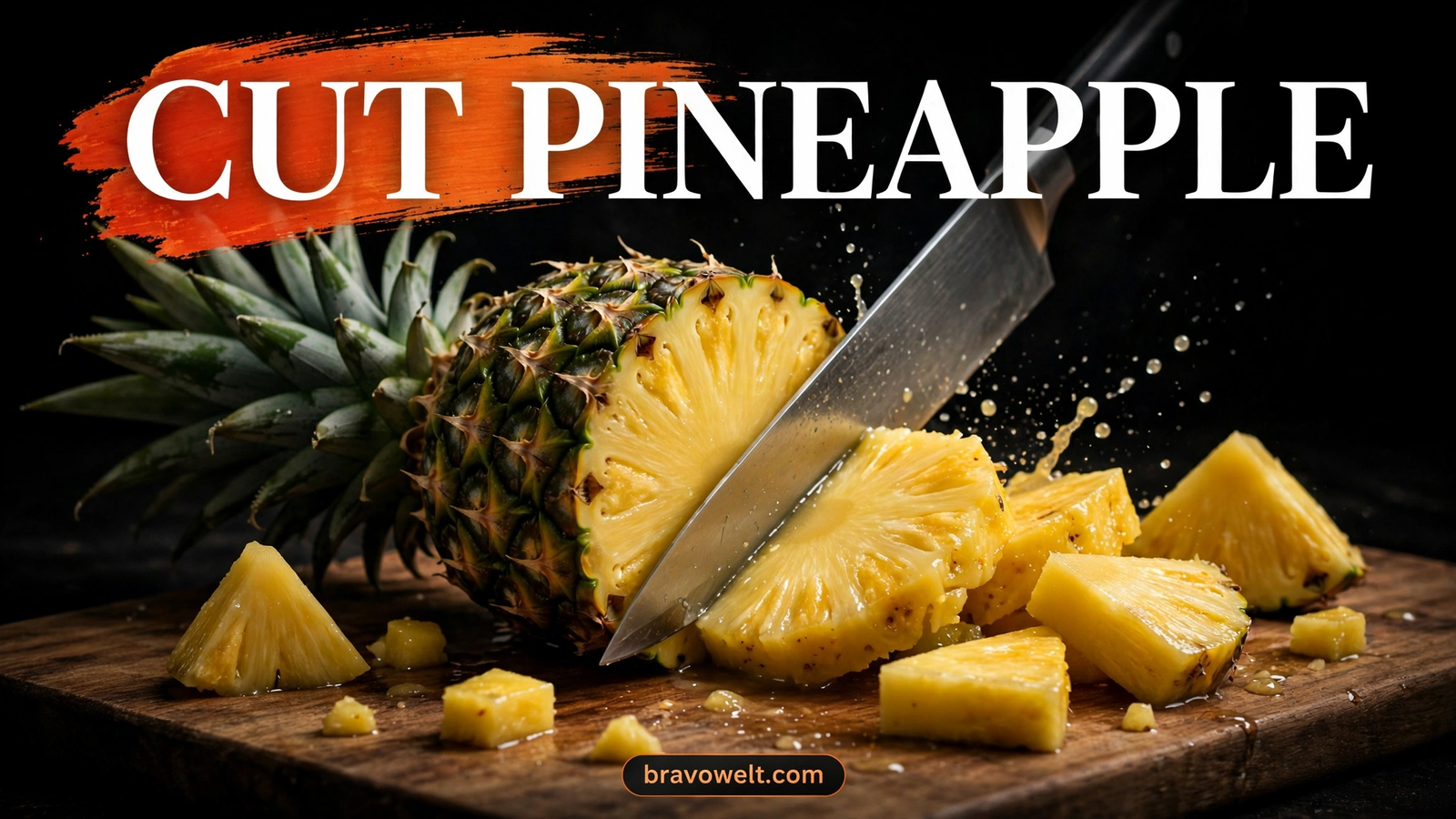
Learning how to cut a pineapple is easier than most people think: slice off the crown and base, stand the fruit upright, cut away the spiky skin in downward strips, quarter the flesh lengthwise, remove the tough core, and chop the remaining flesh into chunks, rings, or spears. The whole process takes less than five minutes once you know the steps, and you only need a sharp chef’s knife and a cutting board to do it. But how do you pick the right pineapple in the first place, and which cutting method gives you the best results for your recipe? This complete guide walks you through everything — from choosing a ripe pineapple at the store to storing your perfectly cut fruit so it stays fresh for days.
Why Learning How to Cut a Pineapple Is Worth It
Pineapple is one of the most rewarding fruits you can buy, yet many shoppers walk right past it because the spiky exterior looks intimidating. Who wants to wrestle with a thorny, armored fruit when pre-cut containers sit conveniently in the produce aisle? The answer is simple: anyone who cares about flavor, nutrition, and their wallet. Freshly cut pineapple tastes dramatically better than the pre-packaged kind, costs far less per pound, and stays crisp and juicy for days when you store it properly.
Pre-cut pineapple from the store has usually been sitting in plastic for days, losing flavor and vitamin content with every passing hour. When you cut your own, you control the ripeness, the thickness of every slice, and exactly how much fruit you prepare. So is it really worth the effort? Absolutely — and after reading this guide, you will wonder why you ever paid extra for those little plastic tubs.
How to Tell If a Pineapple Is Ripe
Before you learn how to cut a pineapple, you need to know how to choose a good one. A perfectly ripe pineapple should feel heavy for its size, which signals that it is full of juice. Look for fruit with vibrant green leaves on the crown, firm skin with a slight give when you press it gently, and a sweet tropical smell at the base. If the bottom smells fermented or vinegary, the fruit is overripe and best avoided.
Many people believe you can judge ripeness by pulling a leaf from the crown, but does that trick actually work? Not reliably. A leaf that pulls out easily can indicate ripeness, but it can also mean the fruit is past its prime. The table below gives you a much more dependable checklist of ripeness indicators.
| Indicator | What to Look For | What It Means |
|---|---|---|
| Weight | Heavy for its size | Full of juice; likely sweet and ripe |
| Color | Golden yellow spreading up from the base | Green skin means underripe; all-yellow may be overripe |
| Smell | Sweet tropical aroma at the base | No smell means underripe; fermented smell means overripe |
| Feel | Firm with slight give under gentle pressure | Rock-hard means underripe; soft spots mean bruising or rot |
| Crown leaves | Fresh, green, and upright | Brown or wilted leaves suggest the fruit is old |
| Shape | Plump and rounded, slightly larger at the base | A well-developed base holds the most sugar |
Once you bring your pineapple home, you can ripen an underripe one by leaving it on the counter at room temperature for a day or two, standing it upside down to redistribute the sugars from the base. Pineapples do not continue to get sweeter after harvest the way bananas do, though — they only get juicier and softer. So if you want the sweetest fruit, choose the ripest pineapple you can find at the store rather than hoping an underripe one will improve dramatically.
Tools You Need to Cut a Pineapple
You do not need any fancy gadgets to cut a pineapple well. A sharp chef’s knife and a sturdy cutting board are the foundation of every method in this guide. But which tools make the job easiest and safest? The table below breaks down the essentials and the nice-to-have extras.
| Tool | Why You Need It | Tips |
|---|---|---|
| Chef’s knife (8–10 inch) | Long blade powers through the tough skin and fibrous flesh | Hone or sharpen it before you start; a dull knife is more dangerous than a sharp one |
| Large cutting board | Stable surface with room to maneuver the whole fruit | Place a damp towel underneath to stop the board from sliding |
| Paring knife | Helpful for trimming eyes and detail work | Keep it handy for the finishing touches |
| Pineapple corer (optional) | Twists through the center to remove the core and slice rings in one motion | Fun and fast, but gives you less control over slice thickness |
| Kitchen towel or paper towels | Drying the fruit keeps your grip secure and the knife from slipping | Pineapple juice makes everything slippery — wipe your board between steps |
| Airtight container | Storage for your finished cut pineapple | Glass containers keep fruit fresher longer than plastic |
Wash the pineapple under cool running water and pat it dry before you start cutting. This removes dirt and any residues from the skin so they do not transfer to the flesh as you slice. A quick rinse takes ten seconds and makes the whole process cleaner and safer.
Knife Safety: What to Know Before You Start Cutting
Pineapples are tough, round, and slippery — three qualities that make knife safety essential. A pineapple can roll off your board mid-slice, so take a moment to set up your workspace before you make the first cut. Is knife safety really that big a deal for a piece of fruit? Ask anyone who has tried to saw through a pineapple with a dull blade, and you will get a very emphatic yes.
- Use a sharp knife. A sharp blade bites into the skin and flesh with controlled pressure. A dull knife forces you to push harder, which is when slips happen.
- Stabilize your cutting board. Lay a damp kitchen towel or a piece of shelf liner under the board so it cannot slide across the counter.
- Keep the pineapple dry. Pat the skin dry with a towel. Juice on the rind is a slip hazard for both your hand and the blade.
- Cut away from your body. Always angle the blade so that if it slips, it moves away from your fingers and torso.
- Use a claw grip. Curl your fingertips under and rest the flat of the blade against your knuckles, so the knife edge never meets your fingers.
- Take your time. The whole job takes five minutes. Rushing saves nothing and risks everything.
- Never cut toward a hand holding the fruit. Keep your guiding hand behind the blade’s path at all times.
How to Cut a Pineapple Into Chunks (The Classic Method)
Cutting a pineapple into chunks is the most versatile method — perfect for snacking, fruit salads, smoothies, and grilling. This is the technique to master first, because every other method builds on the same basic steps. How long does it take? About four minutes from whole fruit to bowl of golden chunks.
Step 1: Remove the Crown and the Base
Lay the pineapple on its side on your stabilized cutting board. Using your chef’s knife, slice off the crown (the leafy top), cutting about half an inch below the leaves. Then flip the fruit and slice off the base so you have two flat, stable ends. Stand the pineapple upright on its base — it should sit steady without wobbling.
Step 2: Cut Away the Skin
Working from top to bottom, slice the skin away in long vertical strips. Follow the natural curve of the fruit, cutting just deep enough to remove the spiky rind and the white pith beneath it. Rotate the pineapple as you go until all the skin is gone. If you see brown “eyes” (the small dark dots) remaining in the flesh, shave them off with shallow diagonal cuts — they are edible but tough and unpleasant.
Step 3: Quarter the Fruit Lengthwise
With the skin removed, stand the pineapple upright and slice it straight down the middle from top to bottom. Lay the two halves flat-side down and cut each half in half again lengthwise. You now have four long quarters. Notice the tough, fibrous core running along the inner edge of each quarter — that is the part we remove next.
Step 4: Remove the Core and Chop Into Chunks
Lay each quarter on its side and slice away the pale, fibrous core in one long cut. The core is noticeably lighter in color and much harder than the surrounding flesh. Once the core is gone, cut each quarter lengthwise into strips, then chop the strips crosswise into bite-size chunks — about one inch cubes work well for most uses.
- Lay the pineapple on its side; slice off the crown and the base.
- Stand the fruit upright and cut the skin away in downward strips.
- Shave off any remaining brown eyes with shallow diagonal cuts.
- Quarter the pineapple lengthwise from top to bottom.
- Slice the tough core away from each quarter.
- Cut the quarters into strips, then chop the strips into one-inch chunks.
- Transfer the chunks to a bowl or airtight container and refrigerate.
How to Cut a Pineapple Into Rings
Pineapple rings are beautiful — they look stunning on grilled dishes, in tropical desserts, and as cake toppings. Cutting rings is the classic method for canned-style presentation, and it works best when you have a pineapple corer or a round cookie cutter. Can you cut rings without special tools? Yes — you just need a little patience with a paring knife or the rim of a glass.
Step 1: Trim the Ends and Peel the Skin
Follow the same opening steps as the chunk method: slice off the crown and base, stand the pineapple upright, and cut away the skin in downward strips. Remove any remaining eyes with shallow diagonal cuts so the surface is smooth and golden all around.
Step 2: Slice the Pineapple Crosswise
With the peeled pineapple standing upright, slice it crosswise into rounds about half an inch to three-quarters of an inch thick. Thinner rings work well for dehydrating or garnishes; thicker rings hold up better on the grill. Keep your slices as even as possible so they cook at the same rate.
Step 3: Remove the Core From Each Ring
Lay each round flat and cut out the tough center core. The easiest way is a round cookie cutter or the mouth of a small glass pressed firmly through the middle. You can also use the tip of a paring knife to trace a circle around the core and pop it out. Save the cores if you like — they are too fibrous to eat raw, but they work in smoothies or simmered in drinks.
- Slice off the crown and base; peel the skin in downward strips.
- Remove any remaining eyes with shallow diagonal cuts.
- Slice the peeled pineapple crosswise into even rounds.
- Press a cookie cutter or glass through the center of each round to remove the core.
- Arrange the rings on a plate or transfer them to a storage container.
Rings are the most photogenic cut, which makes them ideal when presentation matters. They also expose the maximum surface area, so they caramelize beautifully on a hot grill — a light brush of honey or brown sugar before grilling turns them into a restaurant-quality dessert.
How to Cut a Pineapple Into Spears and Boats
Pineapple spears — long wedges you can pick up and eat like a popsicle — are the best cut for parties, barbecues, and kids. Pineapple boats are a fancier variation where you serve the spears back inside the hollowed-out skin. Which should you choose? Spears are faster and less messy; boats look impressive but take more time. Both start with the same technique.
Step 1: Cut the Pineapple Into Quarters
Slice off the crown and base, peel the skin in downward strips, and remove the eyes, exactly as in the chunk method. Then quarter the pineapple lengthwise from top to bottom so you have four long wedges with the core still attached along the inner edge.
Step 2: Cut Each Quarter Into Spears
Lay a quarter on its side and slice away the core in one long cut. Then cut each cored quarter lengthwise into two or three long spears, depending on how thick you want them. Spears about one inch thick at the wide end are easy to hold and eat. For pineapple boats, cut each quarter into three spears and serve them nested back inside a strip of the reserved skin.
Step 3: Serve or Store
Stand the spears upright in a tall glass for a fun presentation, fan them out on a platter, or pack them into a container for the fridge. If you are serving boats, arrange the spears back into the hollowed shell and garnish with fresh mint or a sprinkle of shredded coconut.
- Remove the crown and base; peel the skin in downward strips and remove the eyes.
- Quarter the pineapple lengthwise from top to bottom.
- Slice the core away from each quarter in one long cut.
- Cut each cored quarter lengthwise into two or three long spears.
- Serve upright in glasses, on a platter, or nested in the skin as boats.
How to Cut a Pineapple: Method Comparison
Now that you know all three techniques, how do you choose between them? The best method depends on what you are making, how much time you have, and how you want the finished fruit to look. This comparison table lays out the tradeoffs at a glance.
| Factor | Chunks | Rings | Spears and Boats |
|---|---|---|---|
| Best for | Fruit salad, smoothies, snacking, grilling | Grilling, desserts, cake decoration, dehydrating | Parties, kids, snacking, impressive platters |
| Time required | About 4 minutes | About 5 minutes | About 5–6 minutes |
| Difficulty | Easiest; very forgiving | Medium; needs even slicing | Easy; just requires steady cuts |
| Special tools | None | Cookie cutter, glass, or corer helps | None |
| Presentation | Casual and practical | Elegant and uniform | Fun and festive |
| Yield from one fruit | About 4–5 cups | About 8–10 rings | About 8–12 spears |
| Waste level | Low | Moderate (core holes) | Low |
So which cutting method is fastest? Chunks win on speed and simplicity, which is why most home cooks default to them. But if you are grilling or making a dessert that needs to look polished, rings and spears are worth the extra minute.
Read our detailed guide on how to delete facebook account.
How to Remove the Pineapple Core
The pineapple core is the dense, fibrous cylinder running through the center of the fruit from top to bottom. It is noticeably paler and tougher than the surrounding flesh, and while it is technically edible, its chewy texture makes it unpleasant to eat raw. Every cutting method involves removing it, but the technique varies slightly depending on the shape you are making.
- For chunks and spears: After quartering the fruit lengthwise, lay each quarter on its side and slice the core away in one straight cut along the inner edge. You lose very little edible flesh this way.
- For rings: After slicing the peeled pineapple into rounds, press a cookie cutter, the rim of a glass, or a pineapple corer through the center of each round to punch out the core.
- For the whole-fruit shortcut: A spiral pineapple corer twists down through the center, extracting the core and cutting the flesh into a spiral in one motion. It is fast but gives you less control over thickness.
What should you do with the cores instead of throwing them away? Do not waste them. Pineapple cores are packed with bromelain, the enzyme that makes pineapple famous. Toss cores into smoothies where the blender breaks down the fiber, simmer them in water with ginger for a soothing tea, or freeze them to infuse pitchers of water. You can also chop them finely and add them to marinades — bromelain is a natural meat tenderizer.
One caution: bromelain is also the reason fresh pineapple can make your mouth tingle or feel raw. The enzyme breaks down proteins, including the delicate tissues in your mouth. If you are sensitive, eating smaller amounts or choosing fully ripe fruit (which has less active bromelain) helps. Cooking or canning pineapple deactivates the enzyme entirely, which is why canned pineapple never causes that tingling sensation.
How to Store Cut Pineapple So It Stays Fresh
Once you have learned how to cut a pineapple, the next question is how to keep it fresh. Cut pineapple is perishable, but stored correctly it stays juicy and delicious for days. The golden rule is simple: airtight container, refrigerator, and as little air contact as possible. But how long does cut pineapple actually last? It depends on how you store it, as the table below shows.
| Storage Method | How Long It Lasts | Best Practices |
|---|---|---|
| Refrigerator (airtight container) | 5–7 days | Use a glass container with a tight lid; keep at 35–40°F (2–4°C) |
| Refrigerator (in its own juice) | Up to 7 days | Save the juice that collects while cutting and pour it over the fruit |
| Freezer (chunks or rings) | 10–12 months | Freeze on a tray first, then transfer to freezer bags to prevent clumping |
| Countertop (cut fruit) | 2 hours maximum | Never leave cut pineapple at room temperature longer than 2 hours |
| Whole uncut pineapple | 2–3 days at room temperature; up to 5 days refrigerated | Store whole fruit in the fridge once ripe to slow further softening |
For freezing, spread your chunks or rings in a single layer on a parchment-lined baking sheet and freeze for two to three hours before transferring them to freezer bags. This flash-freezing step keeps the pieces from sticking together, so you can grab exactly as many as you need for a smoothie. Squeeze the air out of the bag before sealing to prevent freezer burn.
How can you tell if cut pineapple has gone bad? Trust your senses. Fresh cut pineapple smells sweet and tropical; spoiled pineapple smells fermented, sour, or like alcohol. Discard fruit that has turned brown, developed a slimy texture, or tastes fizzy. When in doubt, throw it out — pineapple ferments quickly once it turns.
Pineapple Nutrition Facts
Pineapple is not just delicious — it is a nutritional powerhouse. A single cup of fresh pineapple chunks delivers a remarkable amount of vitamin C, manganese, and beneficial plant compounds for very few calories. According to Healthline, one cup of pineapple chunks contains about 82 calories and provides more than 130% of the daily value for vitamin C, making it one of the most vitamin-dense fruits you can eat.
| Nutrient (per 1 cup / 165 g chunks) | Amount | Why It Matters |
|---|---|---|
| Calories | 82 | Low-calorie snack that satisfies a sweet craving |
| Vitamin C | 79 mg (131% DV) | Supports immunity, skin health, and iron absorption |
| Manganese | 1.5 mg (76% DV) | Essential for bone health and metabolism |
| Fiber | 2.3 g | Aids digestion and helps you feel full |
| Vitamin B6 | 0.2 mg (9% DV) | Supports brain health and energy metabolism |
| Bromelain | Trace (enzyme) | May support digestion and reduce inflammation |
| Water content | About 86% | Helps with hydration on hot days |
The standout compound in pineapple is bromelain, a group of enzymes with documented digestive and anti-inflammatory properties. As Medical News Today reports, bromelain has been studied for its potential to reduce inflammation, ease sinus congestion, and support recovery after exercise. While most of the research uses concentrated bromelain supplements rather than fresh fruit, eating fresh pineapple regularly is a tasty way to get a natural dose.
Pineapple’s natural sugars make it taste like candy, but its glycemic impact is moderate thanks to the fiber and water content. Diabetics can enjoy pineapple in reasonable portions — about half a cup to a cup — ideally paired with protein or healthy fat to slow sugar absorption. As with any fruit, whole fresh pineapple is far better than juice, which strips out the fiber and concentrates the sugar.
Easy Recipes and Ways to Use Cut Pineapple
Now that you have a bowl of perfectly cut pineapple, what should you do with it? Beyond eating it straight from the bowl (no judgment — it is that good), cut pineapple is one of the most versatile ingredients in your kitchen. It works in sweet dishes, savory dishes, drinks, and even as a natural tenderizer.
Sweet Ideas
- Tropical fruit salad: Toss pineapple chunks with mango, kiwi, strawberries, and a squeeze of lime. Chill for 30 minutes before serving.
- Grilled pineapple dessert: Brush thick rings or spears with honey, grill 2–3 minutes per side until caramelized, and serve with vanilla ice cream.
- Pineapple smoothies: Blend one cup of frozen pineapple chunks with half a banana, half a cup of coconut water, and a handful of spinach.
- Pineapple upside-down cake: Arrange rings in a buttered pan with brown sugar, pour cake batter over the top, and bake.
- Frozen pineapple nice cream: Blend frozen chunks with a splash of coconut milk until creamy — a two-ingredient healthy dessert.
Savory Ideas
- Hawaiian pizza topping: Scatter small chunks over pizza with ham or Canadian bacon before baking.
- Pineapple salsa: Dice pineapple finely and mix with red onion, jalapeño, cilantro, and lime juice. Perfect on fish tacos.
- Sweet and sour stir-fry: Add chunks to chicken or tofu stir-fry in the last two minutes of cooking.
- Teriyaki glaze: Blend pineapple with soy sauce, ginger, and garlic for a homemade teriyaki sauce.
- Burger topping: A grilled pineapple ring on a burger with Swiss cheese is a classic for a reason.
Drinks
- Fresh pineapple juice: Blend chunks with a little water and strain — far better than anything from a carton.
- Pineapple infused water: Add chunks and cores to a pitcher of cold water with mint; refrigerate for two hours.
- Tropical iced tea: Muddle pineapple chunks with black tea, ice, and a touch of honey.
- Piña colada smoothie: Blend frozen pineapple with coconut milk and ice for a non-alcoholic version of the classic.
One important cooking note: never use fresh pineapple in gelatin desserts like Jell-O. The bromelain enzyme breaks down the proteins that make gelatin set, so your dessert will stay liquid. Canned pineapple works fine because the heat of canning deactivates the enzyme. The same enzyme is why fresh pineapple makes an excellent meat marinade — but limit marinating time to one or two hours, or the meat can turn mushy.
Troubleshooting: Common Problems When Cutting Pineapple
Even with a perfect technique, things can go sideways. Maybe your pineapple is underripe, your knife keeps slipping, or the fruit tastes sour. What went wrong, and how do you fix it? Here are the most common problems and their solutions.
The Pineapple Is Too Sour
Sourness usually means the fruit was underripe. You cannot make an underripe pineapple sweeter after cutting, but you can balance the tartness. Sprinkle the chunks lightly with a pinch of salt — it sounds strange, but salt suppresses bitterness and enhances sweetness. A light dusting of sugar or a drizzle of honey works too, and grilling caramelizes the natural sugars to mellow the tartness.
The Fruit Is Hard to Cut
If your knife struggles to get through the flesh, the pineapple is likely underripe, or your knife needs sharpening. Leave the whole fruit on the counter for a day or two to soften, and hone your blade before trying again. Never force a dull knife through tough fruit — that is how accidents happen.
Your Mouth Feels Raw or Tingly
That burning, tingly feeling comes from bromelain, the protein-digesting enzyme in fresh pineapple. Fully ripe pineapples contain less active bromelain than underripe ones, so choosing a ripe fruit helps. Eating pineapple with dairy — yogurt, ice cream, or cream cheese — also helps, because the enzyme attacks the milk proteins instead of your mouth. And remember: cooking deactivates bromelain completely.
Too Many Eyes Left in the Flesh
If you keep finding tough brown eyes after peeling, you are not cutting deep enough on the first pass. Next time, angle your downward strips slightly deeper, or follow up with the diagonal V-cuts described in the chunk method — cutting along the natural diagonal rows of eyes removes them in neat channels with minimal waste.
The Cut Fruit Turned Brown
Browning on cut pineapple is usually a sign of oxidation or the very beginning of spoilage. A light toss in lemon or lime juice slows browning, just as it does with apples. But if the fruit smells fermented or tastes fizzy, it has started to ferment — discard it rather than trying to save it.
Frequently Asked Questions About How to Cut a Pineapple
Do you cut a pineapple lengthwise or crosswise?
It depends on the shape you want. Cut lengthwise (top to bottom) for chunks and spears, and crosswise (into rounds) for rings. Lengthwise cutting follows the fruit’s natural fiber direction and makes core removal easy; crosswise cutting gives you those classic uniform rings.
Should you refrigerate a whole pineapple before cutting?
Refrigeration is optional but helpful. Chilling the whole fruit for an hour or two before cutting firms up the flesh, which makes cleaner cuts and reduces juice splatter. It also makes the pineapple more refreshing to eat immediately. Just do not store an unripe pineapple in the fridge for days — cold slows the ripening process.
Can you cut a pineapple the night before a party?
Yes. Cut pineapple stored in an airtight container in the refrigerator stays fresh for 5–7 days, so cutting it the night before is perfectly fine. For the best presentation, pat the pieces dry before arranging them on a platter so they look fresh rather than sitting in juice.
Is the pineapple core poisonous?
No, the core is completely safe to eat — it is just tough and fibrous. Some people chew on cores for the extra bromelain, and they are excellent blended into smoothies or simmered into teas. There is nothing toxic about any part of the pineapple fruit.
How much fruit do you get from one pineapple?
A medium pineapple (about 4–5 pounds whole) yields roughly 4–5 cups of cut chunks, 8–10 rings, or 8–12 spears after peeling and coring. That is enough for a large fruit salad serving 8–10 people, or several days of snacking for a family.
Can you eat pineapple skin?
The spiky outer skin is not edible raw, but it is not useless either. Simmered skins make a traditional Latin American drink called tepache when fermented with sugar and spices, and they can be boiled into a fragrant tea. Just wash the skin thoroughly first.
Conclusion
Learning how to cut a pineapple comes down to a simple sequence: choose a ripe, heavy fruit with a sweet smell at its base, slice off the crown and bottom, peel the skin in downward strips, remove the core, and cut the flesh into chunks, rings, or spears. With a sharp knife, a stable cutting board, and the techniques in this guide, you can go from whole spiky fruit to a bowl of golden perfection in under five minutes.
The payoff is worth every second. Freshly cut pineapple beats pre-packaged fruit on flavor, nutrition, and price — and now that you know how to pick a ripe one, cut it three different ways, store it properly, and troubleshoot the common problems, there is no reason to ever buy those plastic tubs again. So grab a pineapple on your next grocery run, put your new skills to the test, and enjoy one of nature’s sweetest rewards.
Read our detailed guide on what does 222 mean.